

O-Rings

Dichtomatik 75102143 O-Ring, 221 Dash Number, 1.421 in ID x 1.699 in OD, FKM, 75 Shore A Durometer, Import, Custom 221-viton
O-rings are closed circular rings of circular cross-section. They are made through vulcanization from form tools as a complete ring. The sealing function of the O-ring is achieved by the deformation of the cross-section when installed and compressed in its housing. The O-ring can be compressed either radially or axially in its installation housing. In operating conditions the pressure exerted by the media reinforces the sealing function, as under pressure the elastomer material functions as a non-compressible fluid.
O-rings are closed circular rings of circular cross-section. They are made through vulcanization from form tools as a complete ring. The sealing function of the O-ring is achieved by the deformation of the cross-section when installed and compressed in its housing. The O-ring can be compressed either radially or axially in its installation housing. In operating conditions the pressure exerted by the media reinforces the sealing function, as under pressure the elastomer material functions as a non-compressible fluid.

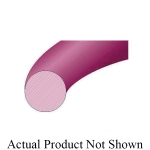
Dichtomatik 75102145 O-Ring, 223 Dash Number, 1.609 in ID x 1.887 in OD, FKM, 75 Shore A Durometer, Import, Customer 223-VITON
O-rings are closed circular rings of circular cross-section. They are made through vulcanization from form tools as a complete ring. The sealing function of the O-ring is achieved by the deformation of the cross-section when installed and compressed in its housing. The O-ring can be compressed either radially or axially in its installation housing. In operating conditions the pressure exerted by the media reinforces the sealing function, as under pressure the elastomer material functions as a non-compressible fluid.
Dichtomatik 75102147 O-Ring, 225 Dash Number, 1.859 in ID x 2.137 in OD, FKM, 75 Shore A Durometer, Import, Custom 225-VITON
O-rings are closed circular rings of circular cross-section. They are made through vulcanization from form tools as a complete ring. The sealing function of the O-ring is achieved by the deformation of the cross-section when installed and compressed in its housing. The O-ring can be compressed either radially or axially in its installation housing. In operating conditions the pressure exerted by the media reinforces the sealing function, as under pressure the elastomer material functions as a non-compressible fluid.
Dichtomatik 75102151 O-Ring, 229 Dash Number, 2.359 in ID x 2.637 in OD, FKM, 75 Shore A Durometer, Import, Custom 229-VITON
O-rings are closed circular rings of circular cross-section. They are made through vulcanization from form tools as a complete ring. The sealing function of the O-ring is achieved by the deformation of the cross-section when installed and compressed in its housing. The O-ring can be compressed either radially or axially in its installation housing. In operating conditions the pressure exerted by the media reinforces the sealing function, as under pressure the elastomer material functions as a non-compressible fluid.
Dichtomatik 75102154 O-Ring, 232 Dash Number, 2.734 in ID x 3.012 in OD, FKM, 75 Shore A Durometer, Import, Custom 232-VITON
O-rings are closed circular rings of circular cross-section. They are made through vulcanization from form tools as a complete ring. The sealing function of the O-ring is achieved by the deformation of the cross-section when installed and compressed in its housing. The O-ring can be compressed either radially or axially in its installation housing. In operating conditions the pressure exerted by the media reinforces the sealing function, as under pressure the elastomer material functions as a non-compressible fluid.
Dichtomatik 75102156 O-Ring, 234 Dash Number, 2.984 in ID x 3.262 in OD, FKM, 75 Shore A Durometer, Import, Custom 234-VITON
O-rings are closed circular rings of circular cross-section. They are made through vulcanization from form tools as a complete ring. The sealing function of the O-ring is achieved by the deformation of the cross-section when installed and compressed in its housing. The O-ring can be compressed either radially or axially in its installation housing. In operating conditions the pressure exerted by the media reinforces the sealing function, as under pressure the elastomer material functions as a non-compressible fluid.
Dichtomatik 75102159 O-Ring, 237 Dash Number, 3.359 in ID x 3.637 in OD, FKM, 75 Shore A Durometer, Import, Custom 237-VITON
O-rings are closed circular rings of circular cross-section. They are made through vulcanization from form tools as a complete ring. The sealing function of the O-ring is achieved by the deformation of the cross-section when installed and compressed in its housing. The O-ring can be compressed either radially or axially in its installation housing. In operating conditions the pressure exerted by the media reinforces the sealing function, as under pressure the elastomer material functions as a non-compressible fluid.
Dichtomatik 75102160 O-Ring, 238 Dash Number, 3.484 in ID x 3.762 in OD, FKM, 75 Shore A Durometer, Import, Custom 238-VITON
O-rings are closed circular rings of circular cross-section. They are made through vulcanization from form tools as a complete ring. The sealing function of the O-ring is achieved by the deformation of the cross-section when installed and compressed in its housing. The O-ring can be compressed either radially or axially in its installation housing. In operating conditions the pressure exerted by the media reinforces the sealing function, as under pressure the elastomer material functions as a non-compressible fluid.
Dichtomatik 75102163 O-Ring, 241 Dash Number, 3.859 in ID x 4.137 in OD, FKM, 75 Shore A Durometer, Import, Custom 241-VITON
O-rings are closed circular rings of circular cross-section. They are made through vulcanization from form tools as a complete ring. The sealing function of the O-ring is achieved by the deformation of the cross-section when installed and compressed in its housing. The O-ring can be compressed either radially or axially in its installation housing. In operating conditions the pressure exerted by the media reinforces the sealing function, as under pressure the elastomer material functions as a non-compressible fluid.
Dichtomatik 75102174 O-Ring, 252 Dash Number, 5.234 in ID x 5.512 in OD, FKM, 75 Shore A Durometer, Import
O-rings are closed circular rings of circular cross-section. They are made through vulcanization from form tools as a complete ring. The sealing function of the O-ring is achieved by the deformation of the cross-section when installed and compressed in its housing. The O-ring can be compressed either radially or axially in its installation housing. In operating conditions the pressure exerted by the media reinforces the sealing function, as under pressure the elastomer material functions as a non-compressible fluid.
Dichtomatik 75102179 O-Ring, 257 Dash Number, 5.859 in ID x 6.137 in OD, FKM, 75 Shore A Durometer, Import
O-rings are closed circular rings of circular cross-section. They are made through vulcanization from form tools as a complete ring. The sealing function of the O-ring is achieved by the deformation of the cross-section when installed and compressed in its housing. The O-ring can be compressed either radially or axially in its installation housing. In operating conditions the pressure exerted by the media reinforces the sealing function, as under pressure the elastomer material functions as a non-compressible fluid.
Dichtomatik 75102227 O-Ring, 329 Dash Number, 1.975 in ID x 2.395 in OD, FKM, 75 Shore A Durometer, Import
O-rings are closed circular rings of circular cross-section. They are made through vulcanization from form tools as a complete ring. The sealing function of the O-ring is achieved by the deformation of the cross-section when installed and compressed in its housing. The O-ring can be compressed either radially or axially in its installation housing. In operating conditions the pressure exerted by the media reinforces the sealing function, as under pressure the elastomer material functions as a non-compressible fluid.
Dichtomatik 75102229 O-Ring, 331 Dash Number, 2.225 in ID x 2.645 in OD, FKM, 75 Shore A Durometer, Import
O-rings are closed circular rings of circular cross-section. They are made through vulcanization from form tools as a complete ring. The sealing function of the O-ring is achieved by the deformation of the cross-section when installed and compressed in its housing. The O-ring can be compressed either radially or axially in its installation housing. In operating conditions the pressure exerted by the media reinforces the sealing function, as under pressure the elastomer material functions as a non-compressible fluid.
Dichtomatik 75102232 O-Ring, 334 Dash Number, 2.6 in ID x 3.02 in OD, FKM, 75 Shore A Durometer, Import
O-rings are closed circular rings of circular cross-section. They are made through vulcanization from form tools as a complete ring. The sealing function of the O-ring is achieved by the deformation of the cross-section when installed and compressed in its housing. The O-ring can be compressed either radially or axially in its installation housing. In operating conditions the pressure exerted by the media reinforces the sealing function, as under pressure the elastomer material functions as a non-compressible fluid.
Dichtomatik 75102234 O-Ring, 336 Dash Number, 2.85 in ID x 3.27 in OD, FKM, 75 Shore A Durometer, Import
O-rings are closed circular rings of circular cross-section. They are made through vulcanization from form tools as a complete ring. The sealing function of the O-ring is achieved by the deformation of the cross-section when installed and compressed in its housing. The O-ring can be compressed either radially or axially in its installation housing. In operating conditions the pressure exerted by the media reinforces the sealing function, as under pressure the elastomer material functions as a non-compressible fluid.
Dichtomatik 75102339 O-Ring, 445 Dash Number, 7.975 in ID x 8.525 in OD, FKM, 75 Shore A Durometer, Import
O-rings are closed circular rings of circular cross-section. They are made through vulcanization from form tools as a complete ring. The sealing function of the O-ring is achieved by the deformation of the cross-section when installed and compressed in its housing. The O-ring can be compressed either radially or axially in its installation housing. In operating conditions the pressure exerted by the media reinforces the sealing function, as under pressure the elastomer material functions as a non-compressible fluid.
Dichtomatik 75102381 O-Ring, 912 Dash Number, 0.924 in ID x 1.156 in OD, FKM, 75 Shore A Durometer, Import, Custom 912-VITON
O-rings are closed circular rings of circular cross-section. They are made through vulcanization from form tools as a complete ring. The sealing function of the O-ring is achieved by the deformation of the cross-section when installed and compressed in its housing. The O-ring can be compressed either radially or axially in its installation housing. In operating conditions the pressure exerted by the media reinforces the sealing function, as under pressure the elastomer material functions as a non-compressible fluid.

Dichtomatik 75115170 O-Ring, 134 Dash Number, 1.862 in ID x 2.068 in OD, PTFE, 55 Durometer, Import, Custom 134-TEFLON
O-rings are endless, ring shaped sealing elements with a circular cross-section that are manufactured from elastomer materials or PTFE. The designation of an O-ring is derived from the dimensions of its inner diameter and cord width in millimeters, along with the name of the material and its Shore A hardness.
Dichtomatik 75115172 O-Ring, 136 Dash Number, 1.987 in ID x 2.193 in OD, PTFE, 55 Durometer, Import, Custom 136-TEFLON
O-rings are endless, ring shaped sealing elements with a circular cross-section that are manufactured from elastomer materials or PTFE. The designation of an O-ring is derived from the dimensions of its inner diameter and cord width in millimeters, along with the name of the material and its Shore A hardness.
Dichtomatik 75115235 O-Ring, 225 Dash Number, 1.859 in ID x 2.137 in OD, PTFE, 55 Durometer, Import, Custom 225-TEFLON
O-rings are endless, ring shaped sealing elements with a circular cross-section that are manufactured from elastomer materials or PTFE. The designation of an O-ring is derived from the dimensions of its inner diameter and cord width in millimeters, along with the name of the material and its Shore A hardness.
Dichtomatik 75115253 O-Ring, 243 Dash Number, 4.109 in ID x 4.387 in OD, PTFE, 55 Durometer, Import, Custom 243-TEFLON
O-rings are endless, ring shaped sealing elements with a circular cross-section that are manufactured from elastomer materials or PTFE. The designation of an O-ring is derived from the dimensions of its inner diameter and cord width in millimeters, along with the name of the material and its Shore A hardness.
Dichtomatik 75115254 O-Ring, 244 Dash Number, 4.234 in ID x 4.512 in OD, PTFE, 55 Durometer, Import, Custom 244-TEFLON
O-rings are endless, ring shaped sealing elements with a circular cross-section that are manufactured from elastomer materials or PTFE. The designation of an O-ring is derived from the dimensions of its inner diameter and cord width in millimeters, along with the name of the material and its Shore A hardness.
Dichtomatik 75115263 O-Ring, 252 Dash Number, 5.234 in ID x 5.512 in OD, PTFE, 55 Durometer, Import
O-rings are endless, ring shaped sealing elements with a circular cross-section that are manufactured from elastomer materials or PTFE. The designation of an O-ring is derived from the dimensions of its inner diameter and cord width in millimeters, along with the name of the material and its Shore A hardness.
Recently Viewed
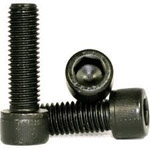
1/2" X 5" USS Socket Head Capscrew

JASON B188 CLASSICAL UNIMATCH MULTI-PLUS V-BELT-B, 21/32 IN TOP WIDTH, 1 STRAND 191 IN. NOMINAL OUTSIDE LENGTH, SMOOTH
V-BELT, B SERIES' 191" BELT OUTSIDE LENGTH; 5/8" BELT WIDTH; 1 BAND; POLYESTER TENSILE MATERIAL; RUBBER AND FABRIC OUTER MATERIAL
-JASB188>

18-MM-ID 1610-STYLE TAPER-LOCK BUSHING - IDC161018MM>
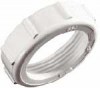
1-1/4" SLIP JOINT WASHERS AND NUTS-JWH444537 >
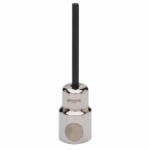
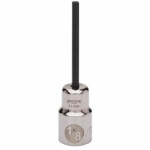
Armstrong® 11-712A Standard Length Socket Driver Bit, 3/8 in Hex Drive, 7/32 in, 2 in L Bit
Armstrong® 11-712A Standard Length Socket Driver Bit, 3/8 in Hex Drive, 7/32 in, 2 in L Bit

Dodge® 083412 First Stage Pinion Gear, 64.5 Diametral Pitch, 57 Teeth, 1-1/2 in Dia Pitch
Dodge® 083412 First Stage Pinion Gear, 64.5 Diametral Pitch, 57 Teeth, 1-1/2 in Dia Pitch

