

O-Rings

Dichtomatik N70016 O-Ring, 016 Dash Number, 0.614 in ID x 0.754 in OD, Nitrile Rubber, 70 Shore A Durometer, Import
O-rings are closed circular rings of circular cross-section. They are made through vulcanization from form tools as a complete ring. The sealing function of the O-ring is achieved by the deformation of the cross-section when installed and compressed in its housing. The O-ring can be compressed either radially or axially in its installation housing. In operating conditions the pressure exerted by the media reinforces the sealing function, as under pressure the elastomer material functions as a non-compressible fluid.
Dichtomatik N70017 O-Ring, 017 Dash Number, 0.676 in ID x 0.816 in OD, Nitrile Rubber, 70 Shore A Durometer, Import
O-rings are closed circular rings of circular cross-section. They are made through vulcanization from form tools as a complete ring. The sealing function of the O-ring is achieved by the deformation of the cross-section when installed and compressed in its housing. The O-ring can be compressed either radially or axially in its installation housing. In operating conditions the pressure exerted by the media reinforces the sealing function, as under pressure the elastomer material functions as a non-compressible fluid.
Dichtomatik N70021 O-Ring, 021 Dash Number, 0.926 in ID x 1.066 in OD, Nitrile Rubber, 70 Shore A Durometer, Import
O-rings are closed circular rings of circular cross-section. They are made through vulcanization from form tools as a complete ring. The sealing function of the O-ring is achieved by the deformation of the cross-section when installed and compressed in its housing. The O-ring can be compressed either radially or axially in its installation housing. In operating conditions the pressure exerted by the media reinforces the sealing function, as under pressure the elastomer material functions as a non-compressible fluid.
Dichtomatik N70024 O-Ring, 024 Dash Number, 1.114 in ID x 1.254 in OD, Nitrile Rubber, 70 Shore A Durometer, Import
O-rings are closed circular rings of circular cross-section. They are made through vulcanization from form tools as a complete ring. The sealing function of the O-ring is achieved by the deformation of the cross-section when installed and compressed in its housing. The O-ring can be compressed either radially or axially in its installation housing. In operating conditions the pressure exerted by the media reinforces the sealing function, as under pressure the elastomer material functions as a non-compressible fluid.
Dichtomatik N70026 O-Ring, 026 Dash Number, 1.239 in ID x 1.379 in OD, Nitrile Rubber, 70 Shore A Durometer, Import
O-rings are closed circular rings of circular cross-section. They are made through vulcanization from form tools as a complete ring. The sealing function of the O-ring is achieved by the deformation of the cross-section when installed and compressed in its housing. The O-ring can be compressed either radially or axially in its installation housing. In operating conditions the pressure exerted by the media reinforces the sealing function, as under pressure the elastomer material functions as a non-compressible fluid.
Dichtomatik N70033 O-Ring, 033 Dash Number, 1.989 in ID x 2.129 in OD, Nitrile Rubber, 70 Shore A Durometer, Import
O-rings are closed circular rings of circular cross-section. They are made through vulcanization from form tools as a complete ring. The sealing function of the O-ring is achieved by the deformation of the cross-section when installed and compressed in its housing. The O-ring can be compressed either radially or axially in its installation housing. In operating conditions the pressure exerted by the media reinforces the sealing function, as under pressure the elastomer material functions as a non-compressible fluid.
Dichtomatik N70034 O-Ring, 034 Dash Number, 2.114 in ID x 2.254 in OD, Nitrile Rubber, 70 Shore A Durometer, Import
O-rings are closed circular rings of circular cross-section. They are made through vulcanization from form tools as a complete ring. The sealing function of the O-ring is achieved by the deformation of the cross-section when installed and compressed in its housing. The O-ring can be compressed either radially or axially in its installation housing. In operating conditions the pressure exerted by the media reinforces the sealing function, as under pressure the elastomer material functions as a non-compressible fluid.
Dichtomatik N70105 O-Ring, 105 Dash Number, 0.143 in ID x 0.349 in OD, Nitrile Rubber, 70 Shore A Durometer, Import
O-rings are closed circular rings of circular cross-section. They are made through vulcanization from form tools as a complete ring. The sealing function of the O-ring is achieved by the deformation of the cross-section when installed and compressed in its housing. The O-ring can be compressed either radially or axially in its installation housing. In operating conditions the pressure exerted by the media reinforces the sealing function, as under pressure the elastomer material functions as a non-compressible fluid.
Dichtomatik N70107 O-Ring, 107 Dash Number, 0.206 in ID x 0.412 in OD, Nitrile Rubber, 70 Shore A Durometer, Import
O-rings are closed circular rings of circular cross-section. They are made through vulcanization from form tools as a complete ring. The sealing function of the O-ring is achieved by the deformation of the cross-section when installed and compressed in its housing. The O-ring can be compressed either radially or axially in its installation housing. In operating conditions the pressure exerted by the media reinforces the sealing function, as under pressure the elastomer material functions as a non-compressible fluid.
Dichtomatik N70108 O-Ring, 108 Dash Number, 0.237 in ID x 0.443 in OD, Nitrile Rubber, 70 Shore A Durometer, Import
O-rings are closed circular rings of circular cross-section. They are made through vulcanization from form tools as a complete ring. The sealing function of the O-ring is achieved by the deformation of the cross-section when installed and compressed in its housing. The O-ring can be compressed either radially or axially in its installation housing. In operating conditions the pressure exerted by the media reinforces the sealing function, as under pressure the elastomer material functions as a non-compressible fluid.
Dichtomatik N70109 O-Ring, 109 Dash Number, 0.299 in ID x 0.505 in OD, Nitrile Rubber, 70 Shore A Durometer, Import
O-rings are closed circular rings of circular cross-section. They are made through vulcanization from form tools as a complete ring. The sealing function of the O-ring is achieved by the deformation of the cross-section when installed and compressed in its housing. The O-ring can be compressed either radially or axially in its installation housing. In operating conditions the pressure exerted by the media reinforces the sealing function, as under pressure the elastomer material functions as a non-compressible fluid.
Dichtomatik N70110 O-Ring, 110 Dash Number, 0.362 in ID x 0.568 in OD, Nitrile Rubber, 70 Shore A Durometer, Import
O-rings are closed circular rings of circular cross-section. They are made through vulcanization from form tools as a complete ring. The sealing function of the O-ring is achieved by the deformation of the cross-section when installed and compressed in its housing. The O-ring can be compressed either radially or axially in its installation housing. In operating conditions the pressure exerted by the media reinforces the sealing function, as under pressure the elastomer material functions as a non-compressible fluid.
Dichtomatik N70112 O-Ring, 112 Dash Number, 0.487 in ID x 0.693 in OD, Nitrile Rubber, 70 Shore A Durometer, Import
O-rings are closed circular rings of circular cross-section. They are made through vulcanization from form tools as a complete ring. The sealing function of the O-ring is achieved by the deformation of the cross-section when installed and compressed in its housing. The O-ring can be compressed either radially or axially in its installation housing. In operating conditions the pressure exerted by the media reinforces the sealing function, as under pressure the elastomer material functions as a non-compressible fluid.
Dichtomatik N70114 O-Ring, 114 Dash Number, 0.612 in ID x 0.818 in OD, Nitrile Rubber, 70 Shore A Durometer, Import
O-rings are closed circular rings of circular cross-section. They are made through vulcanization from form tools as a complete ring. The sealing function of the O-ring is achieved by the deformation of the cross-section when installed and compressed in its housing. The O-ring can be compressed either radially or axially in its installation housing. In operating conditions the pressure exerted by the media reinforces the sealing function, as under pressure the elastomer material functions as a non-compressible fluid.
Dichtomatik N70115 O-Ring, 115 Dash Number, 0.674 in ID x 0.88 in OD, Nitrile Rubber, 70 Shore A Durometer, Import
O-rings are closed circular rings of circular cross-section. They are made through vulcanization from form tools as a complete ring. The sealing function of the O-ring is achieved by the deformation of the cross-section when installed and compressed in its housing. The O-ring can be compressed either radially or axially in its installation housing. In operating conditions the pressure exerted by the media reinforces the sealing function, as under pressure the elastomer material functions as a non-compressible fluid.
Dichtomatik N70116 O-Ring, 116 Dash Number, 0.737 in ID x 0.943 in OD, Nitrile Rubber, 70 Shore A Durometer, Import
O-rings are closed circular rings of circular cross-section. They are made through vulcanization from form tools as a complete ring. The sealing function of the O-ring is achieved by the deformation of the cross-section when installed and compressed in its housing. The O-ring can be compressed either radially or axially in its installation housing. In operating conditions the pressure exerted by the media reinforces the sealing function, as under pressure the elastomer material functions as a non-compressible fluid.
Dichtomatik N70118 O-Ring, 118 Dash Number, 0.862 in ID x 1.068 in OD, Nitrile Rubber, 70 Shore A Durometer, Import
O-rings are closed circular rings of circular cross-section. They are made through vulcanization from form tools as a complete ring. The sealing function of the O-ring is achieved by the deformation of the cross-section when installed and compressed in its housing. The O-ring can be compressed either radially or axially in its installation housing. In operating conditions the pressure exerted by the media reinforces the sealing function, as under pressure the elastomer material functions as a non-compressible fluid.
Dichtomatik N70121 O-Ring, 121 Dash Number, 1.049 in ID x 1.255 in OD, Nitrile Rubber, 70 Shore A Durometer, Import
O-rings are closed circular rings of circular cross-section. They are made through vulcanization from form tools as a complete ring. The sealing function of the O-ring is achieved by the deformation of the cross-section when installed and compressed in its housing. The O-ring can be compressed either radially or axially in its installation housing. In operating conditions the pressure exerted by the media reinforces the sealing function, as under pressure the elastomer material functions as a non-compressible fluid.
Dichtomatik N70124 O-Ring, 124 Dash Number, 1.237 in ID x 1.443 in OD, Nitrile Rubber, 70 Shore A Durometer, Import
O-rings are closed circular rings of circular cross-section. They are made through vulcanization from form tools as a complete ring. The sealing function of the O-ring is achieved by the deformation of the cross-section when installed and compressed in its housing. The O-ring can be compressed either radially or axially in its installation housing. In operating conditions the pressure exerted by the media reinforces the sealing function, as under pressure the elastomer material functions as a non-compressible fluid.
Dichtomatik N70125 O-Ring, 125 Dash Number, 1.299 in ID x 1.505 in OD, Nitrile Rubber, 70 Shore A Durometer, Import
O-rings are closed circular rings of circular cross-section. They are made through vulcanization from form tools as a complete ring. The sealing function of the O-ring is achieved by the deformation of the cross-section when installed and compressed in its housing. The O-ring can be compressed either radially or axially in its installation housing. In operating conditions the pressure exerted by the media reinforces the sealing function, as under pressure the elastomer material functions as a non-compressible fluid.
O-rings are closed circular rings of circular cross-section. They are made through vulcanization from form tools as a complete ring. The sealing function of the O-ring is achieved by the deformation of the cross-section when installed and compressed in its housing. The O-ring can be compressed either radially or axially in its installation housing. In operating conditions the pressure exerted by the media reinforces the sealing function, as under pressure the elastomer material functions as a non-compressible fluid.
O-rings are closed circular rings of circular cross-section. They are made through vulcanization from form tools as a complete ring. The sealing function of the O-ring is achieved by the deformation of the cross-section when installed and compressed in its housing. The O-ring can be compressed either radially or axially in its installation housing. In operating conditions the pressure exerted by the media reinforces the sealing function, as under pressure the elastomer material functions as a non-compressible fluid.
Dichtomatik N70131 O-Ring, 131 Dash Number, 1.674 in ID x 1.88 in OD, Nitrile Rubber, 70 Shore A Durometer, Import, Custom 131
O-rings are closed circular rings of circular cross-section. They are made through vulcanization from form tools as a complete ring. The sealing function of the O-ring is achieved by the deformation of the cross-section when installed and compressed in its housing. The O-ring can be compressed either radially or axially in its installation housing. In operating conditions the pressure exerted by the media reinforces the sealing function, as under pressure the elastomer material functions as a non-compressible fluid.

O-rings are closed circular rings of circular cross-section. They are made through vulcanization from form tools as a complete ring. The sealing function of the O-ring is achieved by the deformation of the cross-section when installed and compressed in its housing. The O-ring can be compressed either radially or axially in its installation housing. In operating conditions the pressure exerted by the media reinforces the sealing function, as under pressure the elastomer material functions as a non-compressible fluid.
Recently Viewed

Browning® finished bore sprockets are offered in single strands. Offerings include 35 to 100 pitch range. Finished bore sprockets are available from 3/8 to 2-7/16 in. Hardened teeth are available up to 30 teeth.
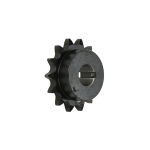
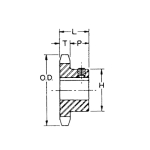
Browning 18-TOOTH #80-1 CHAIN SPROCKETS BRW H-8018 X 1-3/4
Browning® finished bore sprockets are offered in single strands. Offerings include 35 to 100 pitch range. Finished bore sprockets are available from 3/8 to 2-7/16 in. Hardened teeth are available up to 30 teeth.
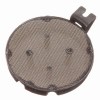
The product is 58467 HOUSING, OIL PICKUP
The product use for power tool lubricants
This product manufacture by United States

Browning® finished bore sprockets are offered in single strands. Offerings include 35 to 100 pitch range. Finished bore sprockets are available from 3/8 to 2-7/16 in. Hardened teeth are available up to 30 teeth.
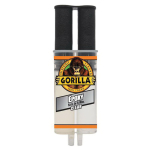
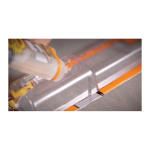
Gorilla® 4200102 Epoxy Adhesive, 0.85 oz Syringe, Clear, 24 hr Curing
Gorilla® takes epoxy to the Gorilla® tough level. With its superior solvent and water resistance, Gorilla® epoxy adhesive is incredibly strong and durable for household and automotive repairs alike. The easy to use syringe keeps the epoxy resin and hardener separate, so it is easy to dispense. The two part, gap filling formula easily bonds steel, aluminum, glass, wood, ceramic, tile and most plastics. Plus, it dries in an ideal, clear finish that makes projects look spotless.
POP-UP CANISTER RESPIRATOR WIPES-OKR5001 >

