

O-Rings

Dichtomatik 75102015 O-Ring, 020 Dash Number, 0.864 in ID x 1.004 in OD, FKM, 75 Shore A Durometer, Import
O-rings are closed circular rings of circular cross-section. They are made through vulcanization from form tools as a complete ring. The sealing function of the O-ring is achieved by the deformation of the cross-section when installed and compressed in its housing. The O-ring can be compressed either radially or axially in its installation housing. In operating conditions the pressure exerted by the media reinforces the sealing function, as under pressure the elastomer material functions as a non-compressible fluid.
Dichtomatik 75102009 O-Ring, 014 Dash Number, 0.489 in ID x 0.629 in OD, FKM, 75 Shore A Durometer, Import
O-rings are closed circular rings of circular cross-section. They are made through vulcanization from form tools as a complete ring. The sealing function of the O-ring is achieved by the deformation of the cross-section when installed and compressed in its housing. The O-ring can be compressed either radially or axially in its installation housing. In operating conditions the pressure exerted by the media reinforces the sealing function, as under pressure the elastomer material functions as a non-compressible fluid.
Dichtomatik 75102008 O-Ring, 013 Dash Number, 0.426 in ID x 0.566 in OD, FKM, 75 Shore A Durometer, Import
O-rings are closed circular rings of circular cross-section. They are made through vulcanization from form tools as a complete ring. The sealing function of the O-ring is achieved by the deformation of the cross-section when installed and compressed in its housing. The O-ring can be compressed either radially or axially in its installation housing. In operating conditions the pressure exerted by the media reinforces the sealing function, as under pressure the elastomer material functions as a non-compressible fluid.
Dichtomatik 75102007 O-Ring, 012 Dash Number, 0.364 in ID x 0.504 in OD, FKM, 75 Shore A Durometer, Import
O-rings are closed circular rings of circular cross-section. They are made through vulcanization from form tools as a complete ring. The sealing function of the O-ring is achieved by the deformation of the cross-section when installed and compressed in its housing. The O-ring can be compressed either radially or axially in its installation housing. In operating conditions the pressure exerted by the media reinforces the sealing function, as under pressure the elastomer material functions as a non-compressible fluid.
Dichtomatik 75102006 O-Ring, 011 Dash Number, 0.301 in ID x 0.441 in OD, FKM, 75 Shore A Durometer, Import
O-rings are closed circular rings of circular cross-section. They are made through vulcanization from form tools as a complete ring. The sealing function of the O-ring is achieved by the deformation of the cross-section when installed and compressed in its housing. The O-ring can be compressed either radially or axially in its installation housing. In operating conditions the pressure exerted by the media reinforces the sealing function, as under pressure the elastomer material functions as a non-compressible fluid.
Dichtomatik 75102005 O-Ring, 010 Dash Number, 0.239 in ID x 0.379 in OD, FKM, 75 Shore A Durometer, Import
O-rings are closed circular rings of circular cross-section. They are made through vulcanization from form tools as a complete ring. The sealing function of the O-ring is achieved by the deformation of the cross-section when installed and compressed in its housing. The O-ring can be compressed either radially or axially in its installation housing. In operating conditions the pressure exerted by the media reinforces the sealing function, as under pressure the elastomer material functions as a non-compressible fluid.
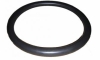
Dichtomatik 75102004 O-Ring, 009 Dash Number, 0.208 in ID x 0.348 in OD, FKM, 75 Shore A Durometer, Import
O-rings are closed circular rings of circular cross-section. They are made through vulcanization from form tools as a complete ring. The sealing function of the O-ring is achieved by the deformation of the cross-section when installed and compressed in its housing. The O-ring can be compressed either radially or axially in its installation housing. In operating conditions the pressure exerted by the media reinforces the sealing function, as under pressure the elastomer material functions as a non-compressible fluid.
O-rings are endless, ring shaped sealing elements with a circular cross-section that are manufactured from elastomer materials or PTFE. The designation of an O-ring is derived from the dimensions of its inner diameter and cord width in millimeters, along with the name of the material and its Shore A hardness.
O-rings are endless, ring shaped sealing elements with a circular cross-section that are manufactured from elastomer materials or PTFE. The designation of an O-ring is derived from the dimensions of its inner diameter and cord width in millimeters, along with the name of the material and its Shore A hardness.
O-rings are endless, ring shaped sealing elements with a circular cross-section that are manufactured from elastomer materials or PTFE. The designation of an O-ring is derived from the dimensions of its inner diameter and cord width in millimeters, along with the name of the material and its Shore A hardness.

Dichtomatik 67192429 O-Ring, 35 mm ID x 41 mm OD, Nitrile Rubber, 70 Shore A Durometer, Import
O-rings are closed circular rings of circular cross-section. They are made through vulcanization from form tools as a complete ring. The sealing function of the O-ring is achieved by the deformation of the cross-section when installed and compressed in its housing. The O-ring can be compressed either radially or axially in its installation housing. In operating conditions the pressure exerted by the media reinforces the sealing function, as under pressure the elastomer material functions as a non-compressible fluid.
Dichtomatik 67192236 O-Ring, 6 mm ID x 10 mm OD, Nitrile Rubber, 70 Shore A Durometer, Import, Custom H-2 X 6
O-rings are closed circular rings of circular cross-section. They are made through vulcanization from form tools as a complete ring. The sealing function of the O-ring is achieved by the deformation of the cross-section when installed and compressed in its housing. The O-ring can be compressed either radially or axially in its installation housing. In operating conditions the pressure exerted by the media reinforces the sealing function, as under pressure the elastomer material functions as a non-compressible fluid.
Dichtomatik 67191875 O-Ring, 54 mm ID x 60 mm OD, Nitrile Rubber, 70 Shore A Durometer, Import
O-rings are closed circular rings of circular cross-section. They are made through vulcanization from form tools as a complete ring. The sealing function of the O-ring is achieved by the deformation of the cross-section when installed and compressed in its housing. The O-ring can be compressed either radially or axially in its installation housing. In operating conditions the pressure exerted by the media reinforces the sealing function, as under pressure the elastomer material functions as a non-compressible fluid.
Dichtomatik 67188388 O-Ring, 3 mm ID x 7 mm OD, Nitrile Rubber, 70 Shore A Durometer, Import, Custom H-2 X 3
O-rings are closed circular rings of circular cross-section. They are made through vulcanization from form tools as a complete ring. The sealing function of the O-ring is achieved by the deformation of the cross-section when installed and compressed in its housing. The O-ring can be compressed either radially or axially in its installation housing. In operating conditions the pressure exerted by the media reinforces the sealing function, as under pressure the elastomer material functions as a non-compressible fluid.
Dichtomatik 67025160 O-Ring, 29.4 mm ID x 35.6 mm OD, FKM, 80 Shore A Durometer, Import, Custom G-30-Vv
O-rings are endless, ring shaped sealing elements with a circular cross-section that are manufactured from elastomer materials or PTFE. The designation of an O-ring is derived from the dimensions of its inner diameter and cord width in millimeters, along with the name of the material and its Shore A hardness.
Dichtomatik 67024982 O-Ring, 7.8 mm ID x 11.6 mm OD, FKM, 80 Shore A Durometer, Import
O-rings are endless, ring shaped sealing elements with a circular cross-section that are manufactured from elastomer materials or PTFE. The designation of an O-ring is derived from the dimensions of its inner diameter and cord width in millimeters, along with the name of the material and its Shore A hardness.
Dichtomatik 67023545 O-Ring, 29.4 mm ID x 35.6 mm OD, Nitrile Rubber, 70 Shore A Durometer, Import, Custom G-30
O-rings are closed circular rings of circular cross-section. They are made through vulcanization from form tools as a complete ring. The sealing function of the O-ring is achieved by the deformation of the cross-section when installed and compressed in its housing. The O-ring can be compressed either radially or axially in its installation housing. In operating conditions the pressure exerted by the media reinforces the sealing function, as under pressure the elastomer material functions as a non-compressible fluid.
Dichtomatik 67013594 O-Ring, 180 mm ID x 190 mm OD, FKM, 80 Shore A Durometer, Import
O-rings are endless, ring shaped sealing elements with a circular cross-section that are manufactured from elastomer materials or PTFE. The designation of an O-ring is derived from the dimensions of its inner diameter and cord width in millimeters, along with the name of the material and its Shore A hardness.
O-rings are endless, ring shaped sealing elements with a circular cross-section that are manufactured from elastomer materials or PTFE. The designation of an O-ring is derived from the dimensions of its inner diameter and cord width in millimeters, along with the name of the material and its Shore A hardness.
Dichtomatik 67013355 O-Ring, 42 mm ID x 46 mm OD, FKM, 80 Shore A Durometer, Import, Custom H-2 x 42-VITON
O-rings are endless, ring shaped sealing elements with a circular cross-section that are manufactured from elastomer materials or PTFE. The designation of an O-ring is derived from the dimensions of its inner diameter and cord width in millimeters, along with the name of the material and its Shore A hardness.
O-rings are endless, ring shaped sealing elements with a circular cross-section that are manufactured from elastomer materials or PTFE. The designation of an O-ring is derived from the dimensions of its inner diameter and cord width in millimeters, along with the name of the material and its Shore A hardness.
O-rings are endless, ring shaped sealing elements with a circular cross-section that are manufactured from elastomer materials or PTFE. The designation of an O-ring is derived from the dimensions of its inner diameter and cord width in millimeters, along with the name of the material and its Shore A hardness.
Dichtomatik 67004836 O-Ring, 242 mm ID x 250 mm OD, Nitrile Rubber, 70 Shore A Durometer, Import
O-rings are closed circular rings of circular cross-section. They are made through vulcanization from form tools as a complete ring. The sealing function of the O-ring is achieved by the deformation of the cross-section when installed and compressed in its housing. The O-ring can be compressed either radially or axially in its installation housing. In operating conditions the pressure exerted by the media reinforces the sealing function, as under pressure the elastomer material functions as a non-compressible fluid.
Dichtomatik 67004496 O-Ring, 70 mm ID x 78 mm OD, Nitrile Rubber, 70 Shore A Durometer, Import
O-rings are closed circular rings of circular cross-section. They are made through vulcanization from form tools as a complete ring. The sealing function of the O-ring is achieved by the deformation of the cross-section when installed and compressed in its housing. The O-ring can be compressed either radially or axially in its installation housing. In operating conditions the pressure exerted by the media reinforces the sealing function, as under pressure the elastomer material functions as a non-compressible fluid.
Recently Viewed
ITM 265TP0864 Heavy Duty Pipe Tap, 27 in Thread
4-1/2" X 7/8" 60-GRIT FLAP DISC-ARC10825 >
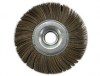
8" X 2" X 1" 60-GRIT FLAP WHEEL-ARC10383 >
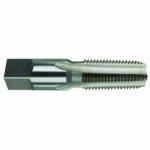
MARXBORE™ 86336 206 General Purpose Pipe Tap, 1-1/4-11-1/2 Thread
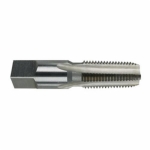
MORSE® 36130 2119 Pipe Tap, 1-1/2-11-1/2 Thread

2" X 50-YDS 400-GRIT PREMIUM SHOP ROLL ALUMINUM OXIDE ABRASIVE MATERIAL; RESIN BOND; J-WEIGHT CLOTH BACKING MATERIAL-ARC0902015 >

