

O-Rings

Dichtomatik N70112 O-Ring, 112 Dash Number, 0.487 in ID x 0.693 in OD, Nitrile Rubber, 70 Shore A Durometer, Import
O-rings are closed circular rings of circular cross-section. They are made through vulcanization from form tools as a complete ring. The sealing function of the O-ring is achieved by the deformation of the cross-section when installed and compressed in its housing. The O-ring can be compressed either radially or axially in its installation housing. In operating conditions the pressure exerted by the media reinforces the sealing function, as under pressure the elastomer material functions as a non-compressible fluid.
Dichtomatik N70110 O-Ring, 110 Dash Number, 0.362 in ID x 0.568 in OD, Nitrile Rubber, 70 Shore A Durometer, Import
O-rings are closed circular rings of circular cross-section. They are made through vulcanization from form tools as a complete ring. The sealing function of the O-ring is achieved by the deformation of the cross-section when installed and compressed in its housing. The O-ring can be compressed either radially or axially in its installation housing. In operating conditions the pressure exerted by the media reinforces the sealing function, as under pressure the elastomer material functions as a non-compressible fluid.
Dichtomatik N70109 O-Ring, 109 Dash Number, 0.299 in ID x 0.505 in OD, Nitrile Rubber, 70 Shore A Durometer, Import
O-rings are closed circular rings of circular cross-section. They are made through vulcanization from form tools as a complete ring. The sealing function of the O-ring is achieved by the deformation of the cross-section when installed and compressed in its housing. The O-ring can be compressed either radially or axially in its installation housing. In operating conditions the pressure exerted by the media reinforces the sealing function, as under pressure the elastomer material functions as a non-compressible fluid.
Dichtomatik N70108 O-Ring, 108 Dash Number, 0.237 in ID x 0.443 in OD, Nitrile Rubber, 70 Shore A Durometer, Import
O-rings are closed circular rings of circular cross-section. They are made through vulcanization from form tools as a complete ring. The sealing function of the O-ring is achieved by the deformation of the cross-section when installed and compressed in its housing. The O-ring can be compressed either radially or axially in its installation housing. In operating conditions the pressure exerted by the media reinforces the sealing function, as under pressure the elastomer material functions as a non-compressible fluid.
Dichtomatik N70107 O-Ring, 107 Dash Number, 0.206 in ID x 0.412 in OD, Nitrile Rubber, 70 Shore A Durometer, Import
O-rings are closed circular rings of circular cross-section. They are made through vulcanization from form tools as a complete ring. The sealing function of the O-ring is achieved by the deformation of the cross-section when installed and compressed in its housing. The O-ring can be compressed either radially or axially in its installation housing. In operating conditions the pressure exerted by the media reinforces the sealing function, as under pressure the elastomer material functions as a non-compressible fluid.
Dichtomatik N70105 O-Ring, 105 Dash Number, 0.143 in ID x 0.349 in OD, Nitrile Rubber, 70 Shore A Durometer, Import
O-rings are closed circular rings of circular cross-section. They are made through vulcanization from form tools as a complete ring. The sealing function of the O-ring is achieved by the deformation of the cross-section when installed and compressed in its housing. The O-ring can be compressed either radially or axially in its installation housing. In operating conditions the pressure exerted by the media reinforces the sealing function, as under pressure the elastomer material functions as a non-compressible fluid.
Dichtomatik N70034 O-Ring, 034 Dash Number, 2.114 in ID x 2.254 in OD, Nitrile Rubber, 70 Shore A Durometer, Import
O-rings are closed circular rings of circular cross-section. They are made through vulcanization from form tools as a complete ring. The sealing function of the O-ring is achieved by the deformation of the cross-section when installed and compressed in its housing. The O-ring can be compressed either radially or axially in its installation housing. In operating conditions the pressure exerted by the media reinforces the sealing function, as under pressure the elastomer material functions as a non-compressible fluid.
Dichtomatik N70033 O-Ring, 033 Dash Number, 1.989 in ID x 2.129 in OD, Nitrile Rubber, 70 Shore A Durometer, Import
O-rings are closed circular rings of circular cross-section. They are made through vulcanization from form tools as a complete ring. The sealing function of the O-ring is achieved by the deformation of the cross-section when installed and compressed in its housing. The O-ring can be compressed either radially or axially in its installation housing. In operating conditions the pressure exerted by the media reinforces the sealing function, as under pressure the elastomer material functions as a non-compressible fluid.
Dichtomatik N70026 O-Ring, 026 Dash Number, 1.239 in ID x 1.379 in OD, Nitrile Rubber, 70 Shore A Durometer, Import
O-rings are closed circular rings of circular cross-section. They are made through vulcanization from form tools as a complete ring. The sealing function of the O-ring is achieved by the deformation of the cross-section when installed and compressed in its housing. The O-ring can be compressed either radially or axially in its installation housing. In operating conditions the pressure exerted by the media reinforces the sealing function, as under pressure the elastomer material functions as a non-compressible fluid.
Dichtomatik N70024 O-Ring, 024 Dash Number, 1.114 in ID x 1.254 in OD, Nitrile Rubber, 70 Shore A Durometer, Import
O-rings are closed circular rings of circular cross-section. They are made through vulcanization from form tools as a complete ring. The sealing function of the O-ring is achieved by the deformation of the cross-section when installed and compressed in its housing. The O-ring can be compressed either radially or axially in its installation housing. In operating conditions the pressure exerted by the media reinforces the sealing function, as under pressure the elastomer material functions as a non-compressible fluid.
Dichtomatik N70021 O-Ring, 021 Dash Number, 0.926 in ID x 1.066 in OD, Nitrile Rubber, 70 Shore A Durometer, Import
O-rings are closed circular rings of circular cross-section. They are made through vulcanization from form tools as a complete ring. The sealing function of the O-ring is achieved by the deformation of the cross-section when installed and compressed in its housing. The O-ring can be compressed either radially or axially in its installation housing. In operating conditions the pressure exerted by the media reinforces the sealing function, as under pressure the elastomer material functions as a non-compressible fluid.
Dichtomatik N70017 O-Ring, 017 Dash Number, 0.676 in ID x 0.816 in OD, Nitrile Rubber, 70 Shore A Durometer, Import
O-rings are closed circular rings of circular cross-section. They are made through vulcanization from form tools as a complete ring. The sealing function of the O-ring is achieved by the deformation of the cross-section when installed and compressed in its housing. The O-ring can be compressed either radially or axially in its installation housing. In operating conditions the pressure exerted by the media reinforces the sealing function, as under pressure the elastomer material functions as a non-compressible fluid.
Dichtomatik N70016 O-Ring, 016 Dash Number, 0.614 in ID x 0.754 in OD, Nitrile Rubber, 70 Shore A Durometer, Import
O-rings are closed circular rings of circular cross-section. They are made through vulcanization from form tools as a complete ring. The sealing function of the O-ring is achieved by the deformation of the cross-section when installed and compressed in its housing. The O-ring can be compressed either radially or axially in its installation housing. In operating conditions the pressure exerted by the media reinforces the sealing function, as under pressure the elastomer material functions as a non-compressible fluid.
Dichtomatik N70015 O-Ring, 015 Dash Number, 0.551 in ID x 0.691 in OD, Nitrile Rubber, 70 Shore A Durometer, Import
O-rings are closed circular rings of circular cross-section. They are made through vulcanization from form tools as a complete ring. The sealing function of the O-ring is achieved by the deformation of the cross-section when installed and compressed in its housing. The O-ring can be compressed either radially or axially in its installation housing. In operating conditions the pressure exerted by the media reinforces the sealing function, as under pressure the elastomer material functions as a non-compressible fluid.
Dichtomatik N70014 O-Ring, 014 Dash Number, 0.489 in ID x 0.629 in OD, Nitrile Rubber, 70 Shore A Durometer, Import
O-rings are closed circular rings of circular cross-section. They are made through vulcanization from form tools as a complete ring. The sealing function of the O-ring is achieved by the deformation of the cross-section when installed and compressed in its housing. The O-ring can be compressed either radially or axially in its installation housing. In operating conditions the pressure exerted by the media reinforces the sealing function, as under pressure the elastomer material functions as a non-compressible fluid.
Dichtomatik N70013 O-Ring, 013 Dash Number, 0.426 in ID x 0.566 in OD, Nitrile Rubber, 70 Shore A Durometer, Import
O-rings are closed circular rings of circular cross-section. They are made through vulcanization from form tools as a complete ring. The sealing function of the O-ring is achieved by the deformation of the cross-section when installed and compressed in its housing. The O-ring can be compressed either radially or axially in its installation housing. In operating conditions the pressure exerted by the media reinforces the sealing function, as under pressure the elastomer material functions as a non-compressible fluid.

Dichtomatik N70012 O-Ring, 012 Dash Number, 0.364 in ID x 0.504 in OD, Nitrile Rubber, 70 Shore A Durometer, Import
O-rings are closed circular rings of circular cross-section. They are made through vulcanization from form tools as a complete ring. The sealing function of the O-ring is achieved by the deformation of the cross-section when installed and compressed in its housing. The O-ring can be compressed either radially or axially in its installation housing. In operating conditions the pressure exerted by the media reinforces the sealing function, as under pressure the elastomer material functions as a non-compressible fluid.
Dichtomatik N70011 O-Ring, 011 Dash Number, 0.301 in ID x 0.441 in OD, Nitrile Rubber, 70 Shore A Durometer, Import
O-rings are closed circular rings of circular cross-section. They are made through vulcanization from form tools as a complete ring. The sealing function of the O-ring is achieved by the deformation of the cross-section when installed and compressed in its housing. The O-ring can be compressed either radially or axially in its installation housing. In operating conditions the pressure exerted by the media reinforces the sealing function, as under pressure the elastomer material functions as a non-compressible fluid.
Dichtomatik N70010 O-Ring, 010 Dash Number, 0.239 in ID x 0.379 in OD, Nitrile Rubber, 70 Shore A Durometer, Import
O-rings are closed circular rings of circular cross-section. They are made through vulcanization from form tools as a complete ring. The sealing function of the O-ring is achieved by the deformation of the cross-section when installed and compressed in its housing. The O-ring can be compressed either radially or axially in its installation housing. In operating conditions the pressure exerted by the media reinforces the sealing function, as under pressure the elastomer material functions as a non-compressible fluid.
Dichtomatik N70009 O-Ring, 009 Dash Number, 0.208 in ID x 0.348 in OD, Nitrile Rubber, 70 Shore A Durometer, Import
O-rings are closed circular rings of circular cross-section. They are made through vulcanization from form tools as a complete ring. The sealing function of the O-ring is achieved by the deformation of the cross-section when installed and compressed in its housing. The O-ring can be compressed either radially or axially in its installation housing. In operating conditions the pressure exerted by the media reinforces the sealing function, as under pressure the elastomer material functions as a non-compressible fluid.
Dichtomatik N4.00X096 O-Ring, 96 mm ID x 104 mm OD, Nitrile Rubber, 70 Shore A Durometer, Import
O-rings are closed circular rings of circular cross-section. They are made through vulcanization from form tools as a complete ring. The sealing function of the O-ring is achieved by the deformation of the cross-section when installed and compressed in its housing. The O-ring can be compressed either radially or axially in its installation housing. In operating conditions the pressure exerted by the media reinforces the sealing function, as under pressure the elastomer material functions as a non-compressible fluid.

Dichtomatik N4.00X044 O-Ring, 44 mm ID, Nitrile Rubber, 70 Shore A Durometer, Import
Dichtomatik N3.00X220 O-Ring, 220 mm ID x 226 mm OD, Nitrile Rubber, 70 Shore A Durometer, Import, Custom H-3 X 220
O-rings are closed circular rings of circular cross-section. They are made through vulcanization from form tools as a complete ring. The sealing function of the O-ring is achieved by the deformation of the cross-section when installed and compressed in its housing. The O-ring can be compressed either radially or axially in its installation housing. In operating conditions the pressure exerted by the media reinforces the sealing function, as under pressure the elastomer material functions as a non-compressible fluid.
Dichtomatik N2.50X018 O-Ring, 18 mm ID x 23 mm OD, Nitrile Rubber, 70 Shore A Durometer, Domestic, Custom H-2.5 X 18
O-rings are closed circular rings of circular cross-section. They are made through vulcanization from form tools as a complete ring. The sealing function of the O-ring is achieved by the deformation of the cross-section when installed and compressed in its housing. The O-ring can be compressed either radially or axially in its installation housing. In operating conditions the pressure exerted by the media reinforces the sealing function, as under pressure the elastomer material functions as a non-compressible fluid.
Recently Viewed
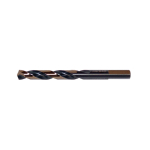
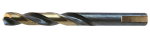
DRILLCO 350N130 Heavy Duty Imperial Mechanics Drill, 15/32 in Drill - Fraction, 0.4688 in Drill - Decimal Inch, HSS, Oxide Treated
Nitro® drills (NAS Type B) offer superior performance over standard HSS drills. Heavy-duty design increases tool life and performance. 135° Split Point reduces walking at the point. Ideal for both hand held and CNC Operations. Black & Gold. 3-flats.
DRILLCO 350N104 Heavy Duty Imperial Mechanics Drill, 1/16 in Drill - Fraction, 0.0625 in Drill - Decimal Inch, HSS, Oxide Treated
Nitro® drills (NAS Type B) offer superior performance over standard HSS drills. Heavy-duty design increases tool life and performance. 135° Split Point reduces walking at the point. Ideal for both hand held and CNC Operations. Black & Gold. 3-flats.
DRILLCO 350N132 Heavy Duty Imperial Mechanics Drill, 1/2 in Drill - Fraction, 0.5 in Drill - Decimal Inch, HSS, Oxide Treated
Nitro® drills (NAS Type B) offer superior performance over standard HSS drills. Heavy-duty design increases tool life and performance. 135° Split Point reduces walking at the point. Ideal for both hand held and CNC Operations. Black & Gold. 3-flats.
DRILLCO 350N125 Heavy Duty Imperial Mechanics Drill, 25/64 in Drill - Fraction, 0.3906 in Drill - Decimal Inch, HSS, Oxide Treated
Nitro® drills (NAS Type B) offer superior performance over standard HSS drills. Heavy-duty design increases tool life and performance. 135° Split Point reduces walking at the point. Ideal for both hand held and CNC Operations. Black & Gold. 3-flats.
DRILLCO 350N119 Heavy Duty Imperial Mechanics Drill, 19/64 in Drill - Fraction, 0.2969 in Drill - Decimal Inch, HSS, Oxide Treated
Nitro® drills (NAS Type B) offer superior performance over standard HSS drills. Heavy-duty design increases tool life and performance. 135° Split Point reduces walking at the point. Ideal for both hand held and CNC Operations. Black & Gold. 3-flats.

Drillco 720A124 Heavy Duty Stub Length Screw Machine Length Drill, 3/8 in Drill - Fraction, 0.375 in Drill - Decimal Inch, Solid Carbide, Uncoated
Slow helix 135° split point provides ease of penetration and increases edge strength. Heavy-duty web, short flute and overall length increase strength and rigidity.Solid Carbide ideally suited for drilling difficult materials (up to Rc 60).

