

O-Rings

Dichtomatik 67004475 O-Ring, 65 mm ID x 73 mm OD, Nitrile Rubber, 70 Shore A Durometer, Domestic
O-rings are closed circular rings of circular cross-section. They are made through vulcanization from form tools as a complete ring. The sealing function of the O-ring is achieved by the deformation of the cross-section when installed and compressed in its housing. The O-ring can be compressed either radially or axially in its installation housing. In operating conditions the pressure exerted by the media reinforces the sealing function, as under pressure the elastomer material functions as a non-compressible fluid.
Dichtomatik 67004452 O-Ring, 60 mm ID x 68 mm OD, Nitrile Rubber, 70 Shore A Durometer, Import
O-rings are closed circular rings of circular cross-section. They are made through vulcanization from form tools as a complete ring. The sealing function of the O-ring is achieved by the deformation of the cross-section when installed and compressed in its housing. The O-ring can be compressed either radially or axially in its installation housing. In operating conditions the pressure exerted by the media reinforces the sealing function, as under pressure the elastomer material functions as a non-compressible fluid.
Dichtomatik 67004221 O-Ring, 28 mm ID x 34 mm OD, Nitrile Rubber, 70 Shore A Durometer, Import, Custom H-3X28
O-rings are closed circular rings of circular cross-section. They are made through vulcanization from form tools as a complete ring. The sealing function of the O-ring is achieved by the deformation of the cross-section when installed and compressed in its housing. The O-ring can be compressed either radially or axially in its installation housing. In operating conditions the pressure exerted by the media reinforces the sealing function, as under pressure the elastomer material functions as a non-compressible fluid.
Dichtomatik 67004150 O-Ring, 20 mm ID x 26 mm OD, Nitrile Rubber, 70 Shore A Durometer, Import, Custom H-3X20
O-rings are closed circular rings of circular cross-section. They are made through vulcanization from form tools as a complete ring. The sealing function of the O-ring is achieved by the deformation of the cross-section when installed and compressed in its housing. The O-ring can be compressed either radially or axially in its installation housing. In operating conditions the pressure exerted by the media reinforces the sealing function, as under pressure the elastomer material functions as a non-compressible fluid.
Dichtomatik 67004048 O-Ring, 13 mm ID x 17 mm OD, Nitrile Rubber, 70 Shore A Durometer, Domestic, Custom H-2 x 13
O-rings are closed circular rings of circular cross-section. They are made through vulcanization from form tools as a complete ring. The sealing function of the O-ring is achieved by the deformation of the cross-section when installed and compressed in its housing. The O-ring can be compressed either radially or axially in its installation housing. In operating conditions the pressure exerted by the media reinforces the sealing function, as under pressure the elastomer material functions as a non-compressible fluid.
Dichtomatik 67004010 O-Ring, 10 mm ID x 14 mm OD, Nitrile Rubber, 70 Shore A Durometer, Import, Custom H-2 X10
O-rings are closed circular rings of circular cross-section. They are made through vulcanization from form tools as a complete ring. The sealing function of the O-ring is achieved by the deformation of the cross-section when installed and compressed in its housing. The O-ring can be compressed either radially or axially in its installation housing. In operating conditions the pressure exerted by the media reinforces the sealing function, as under pressure the elastomer material functions as a non-compressible fluid.
Dichtomatik 67003971 O-Ring, 8 mm ID x 12 mm OD, Nitrile Rubber, 70 Shore A Durometer, Import, Custom H-2 X 8
O-rings are closed circular rings of circular cross-section. They are made through vulcanization from form tools as a complete ring. The sealing function of the O-ring is achieved by the deformation of the cross-section when installed and compressed in its housing. The O-ring can be compressed either radially or axially in its installation housing. In operating conditions the pressure exerted by the media reinforces the sealing function, as under pressure the elastomer material functions as a non-compressible fluid.


O-rings are closed circular rings of circular cross-section. They are made through vulcanization from form tools as a complete ring. The sealing function of the O-ring is achieved by the deformation of the cross-section when installed and compressed in its housing. The O-ring can be compressed either radially or axially in its installation housing. In operating conditions the pressure exerted by the media reinforces the sealing function, as under pressure the elastomer material functions as a non-compressible fluid.
Dichtomatik 67002762 O-Ring, 63 mm ID x 73 mm OD, Nitrile Rubber, 70 Shore A Durometer, Import
O-rings are closed circular rings of circular cross-section. They are made through vulcanization from form tools as a complete ring. The sealing function of the O-ring is achieved by the deformation of the cross-section when installed and compressed in its housing. The O-ring can be compressed either radially or axially in its installation housing. In operating conditions the pressure exerted by the media reinforces the sealing function, as under pressure the elastomer material functions as a non-compressible fluid.
Dichtomatik 49452669 O-Ring, 7 mm ID x 11 mm OD, Nitrile Rubber, 70 Shore A Durometer, Import, Custom H-2 X 7
O-rings are closed circular rings of circular cross-section. They are made through vulcanization from form tools as a complete ring. The sealing function of the O-ring is achieved by the deformation of the cross-section when installed and compressed in its housing. The O-ring can be compressed either radially or axially in its installation housing. In operating conditions the pressure exerted by the media reinforces the sealing function, as under pressure the elastomer material functions as a non-compressible fluid.
O-rings are endless, ring shaped sealing elements with a circular cross-section that are manufactured from elastomer materials or PTFE. The designation of an O-ring is derived from the dimensions of its inner diameter and cord width in millimeters, along with the name of the material and its Shore A hardness.

O-rings are closed circular rings of circular cross-section. They are made through vulcanization from form tools as a complete ring. The sealing function of the O-ring is achieved by the deformation of the cross-section when installed and compressed in its housing. The O-ring can be compressed either radially or axially in its installation housing. In operating conditions the pressure exerted by the media reinforces the sealing function, as under pressure the elastomer material functions as a non-compressible fluid.
O-rings are closed circular rings of circular cross-section. They are made through vulcanization from form tools as a complete ring. The sealing function of the O-ring is achieved by the deformation of the cross-section when installed and compressed in its housing. The O-ring can be compressed either radially or axially in its installation housing. In operating conditions the pressure exerted by the media reinforces the sealing function, as under pressure the elastomer material functions as a non-compressible fluid.
Recently Viewed
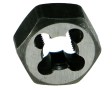
Hexagon Threading Dies are multi-edged, internally threaded tools used for cutting external threads. Hexagon dies are the same size as standard Hex Nuts.

Carbon Steel Taps are used to rethread damaged or jammed threads, or to thread mild steels. They can be used for either through or blind holes. Taper Pipe Tap (NPT).
Hexagon Threading Dies are multi-edged, internally threaded tools used for cutting external threads. Hexagon dies are the same size as standard Hex Nuts.

DRILLCO 21PS160A 2100PS Super High Performance Spiral Point Tap, Right Hand Cutting, M16x2 Thread, D7 Thread Limit, Plug Chamfer, 3 Flutes, Uncoated, HSS
These taps are designed for machine tapping in a wide range of material groups, including difficult to machine materials such as stainless steel. The Nitro multi-application spiral point tap improves thread quality, and aids in chip evacuation.

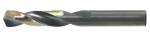
DRILLCO 300N132 Type C Heavy Duty Stub Length Screw Machine Length Drill, 1/2 in Drill - Fraction, 0.5 in Drill - Decimal Inch, HSS, Oxide Treated
Nitro® drills (NAS Type B) offer superior performance over standard HSS drills. Heavy-duty design increases tool life and performance. 135° Split Point reduces walking at the point. Ideal for both hand held and CNC Operations. Black & Gold. Screw machine
Hexagon Threading Dies are multi-edged, internally threaded tools used for cutting external threads. Hexagon dies are the same size as standard Hex Nuts.

