

Timing Pulleys

Synchronous belt drives help reduce the problems of slippage, belt stretch, lubrication and metal to metal contact. They provide superior performance because power is transmitted by positive engagement of belt teeth rather than by friction, as in conventional belt drives.

Synchronous belt drives help reduce the problems of slippage, belt stretch, lubrication and metal to metal contact. They provide superior performance because power is transmitted by positive engagement of belt teeth rather than by friction, as in conventional belt drives.

Synchronous belt drives help reduce the problems of slippage, belt stretch, lubrication and metal to metal contact. They provide superior performance because power is transmitted by positive engagement of belt teeth rather than by friction, as in conventional belt drives.

Synchronous belt drives help reduce the problems of slippage, belt stretch, lubrication and metal to metal contact. They provide superior performance because power is transmitted by positive engagement of belt teeth rather than by friction, as in conventional belt drives.

Synchronous belt drives help reduce the problems of slippage, belt stretch, lubrication and metal to metal contact. They provide superior performance because power is transmitted by positive engagement of belt teeth rather than by friction, as in conventional belt drives.

Synchronous belt drives help reduce the problems of slippage, belt stretch, lubrication and metal to metal contact. They provide superior performance because power is transmitted by positive engagement of belt teeth rather than by friction, as in conventional belt drives.

Synchronous belt drives help reduce the problems of slippage, belt stretch, lubrication and metal to metal contact. They provide superior performance because power is transmitted by positive engagement of belt teeth rather than by friction, as in conventional belt drives.
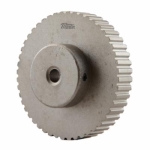

Martin timing pulleys are manufactured to extremely close specifications and are stocked in minimum plain bore, taper bushed, QD bushed styles depending on size and pitch. Synchronous sprockets are non-slip toothed drives that require no lubrication. These sprockets have a wide speed range, are very efficient and make less noise than chain drives. Teeth on the belts are molded to conform with and engage the teeth on a mating sprocket.

Browning® 1055011 Type 2A Synchronous Timing Pulley, 5/16 to 1 in, 3.036 in OD, 48 Grooves, 3.056 in Dia Pitch, 0.563 in W Face
Browning® 1055011 Type 2A Synchronous Timing Pulley, 5/16 to 1 in, 3.036 in OD, 48 Grooves, 3.056 in Dia Pitch, 0.563 in W Face

Browning® Gearbelt® 1054428 Type 1 Synchronous Timing Pulley With Flange, 3/8 in Finished Bore, 1.522 in OD, 13 Grooves, 1.552 in Dia Pitch, 3/4 in W Face
Synchronous belt drives help reduce the problems of slippage, belt stretch, lubrication and metal to metal contact. They provide superior performance because power is transmitted by positive engagement of belt teeth rather than by friction, as in conventional belt drives.

Browning® Gearbelt® 1054444 Type 1 Synchronous Timing Pulley With Flange, 3/8 in Finished Bore, 1.641 in OD, 14 Grooves, 1.671 in Dia Pitch, 3/4 in W Face
Synchronous belt drives help reduce the problems of slippage, belt stretch, lubrication and metal to metal contact. They provide superior performance because power is transmitted by positive engagement of belt teeth rather than by friction, as in conventional belt drives.

Browning® Gearbelt® 1054451 Type 1 Synchronous Timing Pulley With Flange, 1/2 in Finished Bore, 1.641 in OD, 14 Grooves, 1.671 in Dia Pitch, 3/4 in W Face
Synchronous belt drives help reduce the problems of slippage, belt stretch, lubrication and metal to metal contact. They provide superior performance because power is transmitted by positive engagement of belt teeth rather than by friction, as in conventional belt drives.

Browning® Gearbelt® 1054493 Type 1 Synchronous Timing Pulley With Flange, 1/2 in Finished Bore, 1.88 in OD, 16 Grooves, 1.91 in Dia Pitch, 3/4 in W Face
Synchronous belt drives help reduce the problems of slippage, belt stretch, lubrication and metal to metal contact. They provide superior performance because power is transmitted by positive engagement of belt teeth rather than by friction, as in conventional belt drives.

Browning® Gearbelt® 1054501 Type 1 Synchronous Timing Pulley With Flange, 5/8 in Finished Bore, 1.88 in OD, 16 Grooves, 1.91 in Dia Pitch, 3/4 in W Face
Synchronous belt drives help reduce the problems of slippage, belt stretch, lubrication and metal to metal contact. They provide superior performance because power is transmitted by positive engagement of belt teeth rather than by friction, as in conventional belt drives.

Browning® Gearbelt® 1054550 Type 1 Synchronous Timing Pulley With Flange, 3/8 in Finished Bore, 1.402 in OD, 12 Grooves, 1.432 in Dia Pitch, 1 in W Face
Synchronous belt drives help reduce the problems of slippage, belt stretch, lubrication and metal to metal contact. They provide superior performance because power is transmitted by positive engagement of belt teeth rather than by friction, as in conventional belt drives.

Browning® Gearbelt® 1054568 Type 1 Synchronous Timing Pulley With Flange, 1/2 in Finished Bore, 1.402 in OD, 12 Grooves, 1.432 in Dia Pitch, 1 in W Face
Synchronous belt drives help reduce the problems of slippage, belt stretch, lubrication and metal to metal contact. They provide superior performance because power is transmitted by positive engagement of belt teeth rather than by friction, as in conventional belt drives.

Browning® Gearbelt® 1054600 Type 1 Synchronous Timing Pulley With Flange, 1/2 in Finished Bore, 1.641 in OD, 14 Grooves, 1.671 in Dia Pitch, 1 in W Face
Synchronous belt drives help reduce the problems of slippage, belt stretch, lubrication and metal to metal contact. They provide superior performance because power is transmitted by positive engagement of belt teeth rather than by friction, as in conventional belt drives.

Browning® Gearbelt® 1054634 Type 1 Synchronous Timing Pulley With Flange, 3/4 in Finished Bore, 1.76 in OD, 15 Grooves, 1.79 in Dia Pitch, 1 in W Face
Synchronous belt drives help reduce the problems of slippage, belt stretch, lubrication and metal to metal contact. They provide superior performance because power is transmitted by positive engagement of belt teeth rather than by friction, as in conventional belt drives.

Browning® Gearbelt® 1054659 Type 1 Synchronous Timing Pulley With Flange, 5/8 in Finished Bore, 1.88 in OD, 16 Grooves, 1.91 in Dia Pitch, 1 in W Face
Synchronous belt drives help reduce the problems of slippage, belt stretch, lubrication and metal to metal contact. They provide superior performance because power is transmitted by positive engagement of belt teeth rather than by friction, as in conventional belt drives.

Browning® Gearbelt® 1054667 Type 1 Synchronous Timing Pulley With Flange, 3/4 in Finished Bore, 1.88 in OD, 16 Grooves, 1.91 in Dia Pitch, 1 in W Face
Synchronous belt drives help reduce the problems of slippage, belt stretch, lubrication and metal to metal contact. They provide superior performance because power is transmitted by positive engagement of belt teeth rather than by friction, as in conventional belt drives.

Browning® Gearbelt® 1054782 Type 1 Synchronous Timing Pulley With Flange, 5/8 in Finished Bore, 1.88 in OD, 16 Grooves, 1.91 in Dia Pitch, 1-1/4 in W Face
Synchronous belt drives help reduce the problems of slippage, belt stretch, lubrication and metal to metal contact. They provide superior performance because power is transmitted by positive engagement of belt teeth rather than by friction, as in conventional belt drives.

Browning® Gearbelt® 1054865 Type 2 Synchronous Timing Pulley With Flange, 1/4 to 1/4 in Bore, 0.871 in OD, 14 Grooves, 0.891 in Dia Pitch, 9/16 in W Face
Synchronous belt drives help reduce the problems of slippage, belt stretch, lubrication and metal to metal contact. They provide superior performance because power is transmitted by positive engagement of belt teeth rather than by friction, as in conventional belt drives.

Browning® Gearbelt® 1054873 Type 2 Synchronous Timing Pulley With Flange, 1/4 to 5/16 in Bore, 0.935 in OD, 15 Grooves, 0.955 in Dia Pitch, 9/16 in W Face
Synchronous belt drives help reduce the problems of slippage, belt stretch, lubrication and metal to metal contact. They provide superior performance because power is transmitted by positive engagement of belt teeth rather than by friction, as in conventional belt drives.

Browning® Gearbelt® 1054899 Type 2 Synchronous Timing Pulley With Flange, 1/4 to 1/2 in Bore, 1.126 in OD, 18 Grooves, 1.146 in Dia Pitch, 9/16 in W Face
Synchronous belt drives help reduce the problems of slippage, belt stretch, lubrication and metal to metal contact. They provide superior performance because power is transmitted by positive engagement of belt teeth rather than by friction, as in conventional belt drives.
Recently Viewed

Browning® mounted ball bearings feature multiple housing styles, materials and configurations, an extended inner race insert bearing with ball riding nylon retainer. The insert features a rivet to prevent outer ring rotation and is available with setscrew, eccentric, or BOA concentric locking collar. The contact seal, with black oxide treated flinger provides a good balance between contaminant resistance, grease loss and friction. Depending on your preference, these bearings are available in inch and metric bore with a wide variety of cast iron, stamped steel or rubber mount housings or specific industry solutions as illustrated on the pages to follow.

Browning® mounted ball bearings feature multiple housing styles, materials and configurations, an extended inner race insert bearing with ball riding nylon retainer. The insert features a rivet to prevent outer ring rotation and is available with setscrew, eccentric, or BOA concentric locking collar. The contact seal, with black oxide treated flinger provides a good balance between contaminant resistance, grease loss and friction. Depending on your preference, these bearings are available in inch and metric bore with a wide variety of cast iron, stamped steel or rubber mount housings or specific industry solutions as illustrated on the pages to follow.
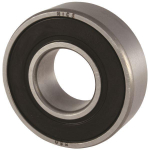
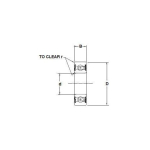
Gulf Bearing 7/16" DOUBLE-SEALED BALL BEARINGS GUL 1620-2-RS
Precision ground 1600® Series bearings are specially designed to provide a line of low cost yet high quality bearings for adaptation to a majority of precision bearing applications. They are made in easy to use inch dimensions and are recommended for medium loads and for maximum speeds in the range of 5000 rpm. The 1600® Series bearings are precision ground on all surfaces with exceptional care given to the ball grooves. Careful heat treatment provides a uniform and exact degree of hardness for maximum life. A ball retainer, or separator, is used to increase the range of allowable speeds by reducing ball-to-ball contact friction.

Browning® mounted ball bearings feature multiple housing styles, materials and configurations, an extended inner race insert bearing with ball riding nylon retainer. The insert features a rivet to prevent outer ring rotation and is available with setscrew, eccentric, or BOA concentric locking collar. The contact seal, with black oxide treated flinger provides a good balance between contaminant resistance, grease loss and friction. Depending on your preference, these bearings are available in inch and metric bore with a wide variety of cast iron, stamped steel or rubber mount housings or specific industry solutions as illustrated on the pages to follow.

Browning® mounted ball bearings feature multiple housing styles, materials and configurations, an extended inner race insert bearing with ball riding nylon retainer. The insert features a rivet to prevent outer ring rotation and is available with setscrew, eccentric, or BOA concentric locking collar. The contact seal, with black oxide treated flinger provides a good balance between contaminant resistance, grease loss and friction. Depending on your preference, these bearings are available in inch and metric bore with a wide variety of cast iron, stamped steel or rubber mount housings or specific industry solutions as illustrated on the pages to follow.
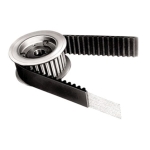
Gates® Power Transmission PowerGrip® HTD® P24-5M-15AL Sprocket, 1/4 to 11/16 in Rough Stock Bore, 1.459 in OD, 24 Grooves, 1.504 in Dia Pitch, 0.547 in W Face
PowerGrip Sprockets and Pulleys provide optimum performance for all constructions of PowerGrip GT, PowerGrip HTD and PowerGrip Timing belts, delivering maximum performance and superior reliability. PowerGrip sprockets are precision manufactured and static balanced to eliminate sprocket wobble.

