

Timing Pulleys

Browning® Gearbelt® 1056563 Type 4 Synchronous Timing Pulley With Flange, 3/8 to 1 in Split Taper Bore, 2.596 in OD, 22 Grooves, 2.626 in Dia Pitch, 1-1/4 in W Face
Synchronous belt drives help reduce the problems of slippage, belt stretch, lubrication and metal to metal contact. They provide superior performance because power is transmitted by positive engagement of belt teeth rather than by friction, as in conventional belt drives.

Browning® Gearbelt® 1056571 Type 4 Synchronous Timing Pulley With Flange, 3/8 to 1-1/2 in Split Taper Bore, 2.835 in OD, 24 Grooves, 2.865 in Dia Pitch, 1-1/4 in W Face
Synchronous belt drives help reduce the problems of slippage, belt stretch, lubrication and metal to metal contact. They provide superior performance because power is transmitted by positive engagement of belt teeth rather than by friction, as in conventional belt drives.

Browning® Gearbelt® 1056589 Type 4 Synchronous Timing Pulley With Flange, 3/8 to 1-1/2 in Split Taper Bore, 3.074 in OD, 26 Grooves, 3.104 in Dia Pitch, 1-1/4 in W Face
Synchronous belt drives help reduce the problems of slippage, belt stretch, lubrication and metal to metal contact. They provide superior performance because power is transmitted by positive engagement of belt teeth rather than by friction, as in conventional belt drives.

Browning® Gearbelt® 1056597 Type 4 Synchronous Timing Pulley With Flange, 3/8 to 1-1/2 in Split Taper Bore, 3.312 in OD, 28 Grooves, 3.342 in Dia Pitch, 1-1/4 in W Face
Synchronous belt drives help reduce the problems of slippage, belt stretch, lubrication and metal to metal contact. They provide superior performance because power is transmitted by positive engagement of belt teeth rather than by friction, as in conventional belt drives.

Browning® Gearbelt® 1056621 Type 16 Synchronous Timing Pulley With Flange, 3/8 to 1-1/2 in Split Taper Bore, 4.267 in OD, 36 Grooves, 4.297 in Dia Pitch, 1-1/4 in W Face
Synchronous belt drives help reduce the problems of slippage, belt stretch, lubrication and metal to metal contact. They provide superior performance because power is transmitted by positive engagement of belt teeth rather than by friction, as in conventional belt drives.

Browning® Gearbelt® 1056662 Type 16 Synchronous Flanged Pulley, 3/8 to 1-1/2 in Split Taper Bore, 5.222 in OD, 44 Grooves, 5.252 in Dia Pitch, 1-1/4 in W Face
Browning® Gearbelt® 1056662 Type 16 Synchronous Flanged Pulley, 3/8 to 1-1/2 in Split Taper Bore, 5.222 in OD, 44 Grooves, 5.252 in Dia Pitch, 1-1/4 in W Face

Browning® Gearbelt® 1056688 Type 16 Synchronous Timing Pulley With Flange, 3/8 to 1-1/2 in Split Taper Bore, 5.7 in OD, 48 Grooves, 5.73 in Dia Pitch, 1-1/4 in W Face
Synchronous belt drives help reduce the problems of slippage, belt stretch, lubrication and metal to metal contact. They provide superior performance because power is transmitted by positive engagement of belt teeth rather than by friction, as in conventional belt drives.

Browning® Gearbelt® 1056829 Type 4 Synchronous Timing Pulley With Flange, 3/8 to 1-1/2 in Split Taper Bore, 2.811 in OD, 18 Grooves, 2.865 in Dia Pitch, 1-1/4 in W Face
Synchronous belt drives help reduce the problems of slippage, belt stretch, lubrication and metal to metal contact. They provide superior performance because power is transmitted by positive engagement of belt teeth rather than by friction, as in conventional belt drives.

Browning® Gearbelt® 1056837 Type 4 Synchronous Timing Pulley With Flange, 3/8 to 1-1/2 in Split Taper Bore, 3.129 in OD, 20 Grooves, 3.183 in Dia Pitch, 1-1/4 in W Face
Synchronous belt drives help reduce the problems of slippage, belt stretch, lubrication and metal to metal contact. They provide superior performance because power is transmitted by positive engagement of belt teeth rather than by friction, as in conventional belt drives.

Browning® Gearbelt® 1056845 Type 16 Synchronous Timing Pulley With Flange, 3/8 to 1-1/2 in Split Taper Bore, 3.447 in OD, 22 Grooves, 3.501 in Dia Pitch, 1-1/4 in W Face
Synchronous belt drives help reduce the problems of slippage, belt stretch, lubrication and metal to metal contact. They provide superior performance because power is transmitted by positive engagement of belt teeth rather than by friction, as in conventional belt drives.

Browning® Gearbelt® 1056852 Type 6 Synchronous Timing Pulley With Flange, 1/2 to 1-3/4 in Split Taper Bore, 3.447 in OD, 22 Grooves, 3.501 in Dia Pitch, 1-1/4 in W Face
Synchronous belt drives help reduce the problems of slippage, belt stretch, lubrication and metal to metal contact. They provide superior performance because power is transmitted by positive engagement of belt teeth rather than by friction, as in conventional belt drives.

Browning® Gearbelt® 1056886 Type 16 Synchronous Timing Pulley With Flange, 3/8 to 1-1/2 in Split Taper Bore, 4.084 in OD, 26 Grooves, 4.138 in Dia Pitch, 1-1/4 in W Face
Synchronous belt drives help reduce the problems of slippage, belt stretch, lubrication and metal to metal contact. They provide superior performance because power is transmitted by positive engagement of belt teeth rather than by friction, as in conventional belt drives.

Browning® Gearbelt® 1056928 Type 16 Synchronous Timing Pulley With Flange, 3/8 to 1-1/2 in Split Taper Bore, 4.721 in OD, 30 Grooves, 4.775 in Dia Pitch, 1-1/4 in W Face
Synchronous belt drives help reduce the problems of slippage, belt stretch, lubrication and metal to metal contact. They provide superior performance because power is transmitted by positive engagement of belt teeth rather than by friction, as in conventional belt drives.

Browning® Gearbelt® 1056977 Type 7 Synchronous Timing Pulley With Flange, 3/4 to 2-11/16 in Split Taper Bore, 6.949 in OD, 44 Grooves, 7.003 in Dia Pitch, 1-1/4 in W Face
Synchronous belt drives help reduce the problems of slippage, belt stretch, lubrication and metal to metal contact. They provide superior performance because power is transmitted by positive engagement of belt teeth rather than by friction, as in conventional belt drives.

Browning® Gearbelt® 1056985 Type 13 Synchronous Flanged Pulley, 3/4 to 2-11/16 in Split Taper Bore, 7.585 in OD, 48 Grooves, 7.639 in Dia Pitch, 1-1/4 in W Face
Browning® Gearbelt® 1056985 Type 13 Synchronous Flanged Pulley, 3/4 to 2-11/16 in Split Taper Bore, 7.585 in OD, 48 Grooves, 7.639 in Dia Pitch, 1-1/4 in W Face

Browning® Gearbelt® 1057009 Type 13 Synchronous Timing Pulley, 3/4 to 2-11/16 in Split Taper Bore, 11.405 in OD, 72 Grooves, 11.459 in Dia Pitch, 1-1/4 in W Face
Browning® Gearbelt® 1057009 Type 13 Synchronous Timing Pulley, 3/4 to 2-11/16 in Split Taper Bore, 11.405 in OD, 72 Grooves, 11.459 in Dia Pitch, 1-1/4 in W Face

Browning® Gearbelt® 1057116 Type 16 Synchronous Timing Pulley With Flange, 3/8 to 1-1/2 in Split Taper Bore, 3.766 in OD, 24 Grooves, 3.82 in Dia Pitch, 1-3/4 in W Face
Synchronous belt drives help reduce the problems of slippage, belt stretch, lubrication and metal to metal contact. They provide superior performance because power is transmitted by positive engagement of belt teeth rather than by friction, as in conventional belt drives.

Browning® Gearbelt® 1057124 Type 9 Synchronous Timing Pulley With Flange, 1/2 to 1-3/4 in Split Taper Bore, 3.766 in OD, 24 Grooves, 3.82 in Dia Pitch, 1-3/4 in W Face
Synchronous belt drives help reduce the problems of slippage, belt stretch, lubrication and metal to metal contact. They provide superior performance because power is transmitted by positive engagement of belt teeth rather than by friction, as in conventional belt drives.

Browning® Gearbelt® 1057132 Type 16 Synchronous Timing Pulley With Flange, 3/8 to 1-1/2 in Split Taper Bore, 4.084 in OD, 26 Grooves, 4.138 in Dia Pitch, 1-3/4 in W Face
Synchronous belt drives help reduce the problems of slippage, belt stretch, lubrication and metal to metal contact. They provide superior performance because power is transmitted by positive engagement of belt teeth rather than by friction, as in conventional belt drives.

Browning® Gearbelt® 1057157 Type 16 Synchronous Timing Pulley With Flange, 3/8 to 1-1/2 in Split Taper Bore, 4.402 in OD, 28 Grooves, 4.456 in Dia Pitch, 1-3/4 in W Face
Synchronous belt drives help reduce the problems of slippage, belt stretch, lubrication and metal to metal contact. They provide superior performance because power is transmitted by positive engagement of belt teeth rather than by friction, as in conventional belt drives.

Browning® Gearbelt® 1057207 Type 9 Synchronous Timing Pulley With Flange, 3/4 to 2-11/16 in Split Taper Bore, 5.676 in OD, 36 Grooves, 5.73 in Dia Pitch, 1-3/4 in W Face
Synchronous belt drives help reduce the problems of slippage, belt stretch, lubrication and metal to metal contact. They provide superior performance because power is transmitted by positive engagement of belt teeth rather than by friction, as in conventional belt drives.

Browning® Gearbelt® 1057231 Type 9 Synchronous Timing Pulley With Flange, 3/4 to 2-11/16 in Split Taper Bore, 7.585 in OD, 48 Grooves, 7.639 in Dia Pitch, 1-3/4 in W Face
Synchronous belt drives help reduce the problems of slippage, belt stretch, lubrication and metal to metal contact. They provide superior performance because power is transmitted by positive engagement of belt teeth rather than by friction, as in conventional belt drives.

Browning® Gearbelt® 1057264 Type 13 Synchronous Timing Pulley, 3/4 to 2-11/16 in Split Taper Bore, 13.315 in OD, 84 Grooves, 13.369 in Dia Pitch, 1-3/4 in W Face
Browning® Gearbelt® 1057264 Type 13 Synchronous Timing Pulley, 3/4 to 2-11/16 in Split Taper Bore, 13.315 in OD, 84 Grooves, 13.369 in Dia Pitch, 1-3/4 in W Face

Browning® Gearbelt® 1057314 Type 6 Synchronous Timing Pulley With Flange, 3/4 to 1-3/4 in Split Taper Bore, 3.766 in OD, 24 Grooves, 3.82 in Dia Pitch, 2-9/32 in W Face
Synchronous belt drives help reduce the problems of slippage, belt stretch, lubrication and metal to metal contact. They provide superior performance because power is transmitted by positive engagement of belt teeth rather than by friction, as in conventional belt drives.
Recently Viewed

MORSE® 44136 4550 Center Cutting Regular Length Single End End Mill, 3/16 in Dia Cutter, 1/2 in Length of Cut, 4 Flutes, 3/8 in Dia Shank, 2-3/8 in OAL, Bright
MORSE® 44135 4550 Center Cutting Regular Length Single End End Mill, 1/8 in Dia Cutter, 3/8 in Length of Cut, 4 Flutes, 3/8 in Dia Shank, 2-5/16 in OAL, Bright

MORSE® 96100 4550G Center Cutting Regular Length Single End End Mill, 1/8 in Dia Cutter, 3/8 in Length of Cut, 4 Flutes, 3/8 in Dia Shank, 2-5/16 in OAL, TiN Coated

All REED cutter wheels are made from high shock-resistant tool steel, while competitive cutter wheels are made from carbon steel or still lower quality tool steel. By using this higher quality raw material, REED cutter wheels can be made thinner and can therefore cut pipe more easily and leave less burr. Also, because of their higher quality, certified material, only REED cutter wheels can be heat-treated for the perfect balance between hardness and toughness to make REED cutter wheels resist breakage and last longer.

MORSE® 43383 1897M Center Cutting Regular Length Single End End Mill, 17 mm Dia Cutter, 1-5/8 in Length of Cut, 4 Flutes, 5/8 in Dia Shank, 3-3/4 in OAL, Bright
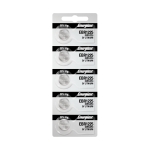
Energizer® EBR1225 Disposable Coin Battery, Lithium/Poly-Carbon Monoflouride, 3 V Nominal, 48 mAh Nominal, 1225
Energizer® EBR1225 Disposable Coin Battery, Lithium/Poly-Carbon Monoflouride, 3 V Nominal, 48 mAh Nominal, 1225

