

Timing Pulleys

Synchronous belt drives help reduce the problems of slippage, belt stretch, lubrication and metal to metal contact. They provide superior performance because power is transmitted by positive engagement of belt teeth rather than by friction, as in conventional belt drives.

Synchronous belt drives help reduce the problems of slippage, belt stretch, lubrication and metal to metal contact. They provide superior performance because power is transmitted by positive engagement of belt teeth rather than by friction, as in conventional belt drives.

Synchronous belt drives help reduce the problems of slippage, belt stretch, lubrication and metal to metal contact. They provide superior performance because power is transmitted by positive engagement of belt teeth rather than by friction, as in conventional belt drives.

Synchronous belt drives help reduce the problems of slippage, belt stretch, lubrication and metal to metal contact. They provide superior performance because power is transmitted by positive engagement of belt teeth rather than by friction, as in conventional belt drives.

Synchronous belt drives help reduce the problems of slippage, belt stretch, lubrication and metal to metal contact. They provide superior performance because power is transmitted by positive engagement of belt teeth rather than by friction, as in conventional belt drives.

Synchronous belt drives help reduce the problems of slippage, belt stretch, lubrication and metal to metal contact. They provide superior performance because power is transmitted by positive engagement of belt teeth rather than by friction, as in conventional belt drives.

Synchronous belt drives help reduce the problems of slippage, belt stretch, lubrication and metal to metal contact. They provide superior performance because power is transmitted by positive engagement of belt teeth rather than by friction, as in conventional belt drives.
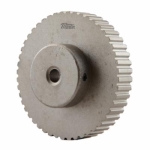

Martin timing pulleys are manufactured to extremely close specifications and are stocked in minimum plain bore, taper bushed, QD bushed styles depending on size and pitch. Synchronous sprockets are non-slip toothed drives that require no lubrication. These sprockets have a wide speed range, are very efficient and make less noise than chain drives. Teeth on the belts are molded to conform with and engage the teeth on a mating sprocket.

Browning® 1055011 Type 2A Synchronous Timing Pulley, 5/16 to 1 in, 3.036 in OD, 48 Grooves, 3.056 in Dia Pitch, 0.563 in W Face
Browning® 1055011 Type 2A Synchronous Timing Pulley, 5/16 to 1 in, 3.036 in OD, 48 Grooves, 3.056 in Dia Pitch, 0.563 in W Face

Browning® Gearbelt® 1054428 Type 1 Synchronous Timing Pulley With Flange, 3/8 in Finished Bore, 1.522 in OD, 13 Grooves, 1.552 in Dia Pitch, 3/4 in W Face
Synchronous belt drives help reduce the problems of slippage, belt stretch, lubrication and metal to metal contact. They provide superior performance because power is transmitted by positive engagement of belt teeth rather than by friction, as in conventional belt drives.

Browning® Gearbelt® 1054444 Type 1 Synchronous Timing Pulley With Flange, 3/8 in Finished Bore, 1.641 in OD, 14 Grooves, 1.671 in Dia Pitch, 3/4 in W Face
Synchronous belt drives help reduce the problems of slippage, belt stretch, lubrication and metal to metal contact. They provide superior performance because power is transmitted by positive engagement of belt teeth rather than by friction, as in conventional belt drives.

Browning® Gearbelt® 1054451 Type 1 Synchronous Timing Pulley With Flange, 1/2 in Finished Bore, 1.641 in OD, 14 Grooves, 1.671 in Dia Pitch, 3/4 in W Face
Synchronous belt drives help reduce the problems of slippage, belt stretch, lubrication and metal to metal contact. They provide superior performance because power is transmitted by positive engagement of belt teeth rather than by friction, as in conventional belt drives.

Browning® Gearbelt® 1054493 Type 1 Synchronous Timing Pulley With Flange, 1/2 in Finished Bore, 1.88 in OD, 16 Grooves, 1.91 in Dia Pitch, 3/4 in W Face
Synchronous belt drives help reduce the problems of slippage, belt stretch, lubrication and metal to metal contact. They provide superior performance because power is transmitted by positive engagement of belt teeth rather than by friction, as in conventional belt drives.

Browning® Gearbelt® 1054501 Type 1 Synchronous Timing Pulley With Flange, 5/8 in Finished Bore, 1.88 in OD, 16 Grooves, 1.91 in Dia Pitch, 3/4 in W Face
Synchronous belt drives help reduce the problems of slippage, belt stretch, lubrication and metal to metal contact. They provide superior performance because power is transmitted by positive engagement of belt teeth rather than by friction, as in conventional belt drives.

Browning® Gearbelt® 1054550 Type 1 Synchronous Timing Pulley With Flange, 3/8 in Finished Bore, 1.402 in OD, 12 Grooves, 1.432 in Dia Pitch, 1 in W Face
Synchronous belt drives help reduce the problems of slippage, belt stretch, lubrication and metal to metal contact. They provide superior performance because power is transmitted by positive engagement of belt teeth rather than by friction, as in conventional belt drives.

Browning® Gearbelt® 1054568 Type 1 Synchronous Timing Pulley With Flange, 1/2 in Finished Bore, 1.402 in OD, 12 Grooves, 1.432 in Dia Pitch, 1 in W Face
Synchronous belt drives help reduce the problems of slippage, belt stretch, lubrication and metal to metal contact. They provide superior performance because power is transmitted by positive engagement of belt teeth rather than by friction, as in conventional belt drives.

Browning® Gearbelt® 1054600 Type 1 Synchronous Timing Pulley With Flange, 1/2 in Finished Bore, 1.641 in OD, 14 Grooves, 1.671 in Dia Pitch, 1 in W Face
Synchronous belt drives help reduce the problems of slippage, belt stretch, lubrication and metal to metal contact. They provide superior performance because power is transmitted by positive engagement of belt teeth rather than by friction, as in conventional belt drives.

Browning® Gearbelt® 1054634 Type 1 Synchronous Timing Pulley With Flange, 3/4 in Finished Bore, 1.76 in OD, 15 Grooves, 1.79 in Dia Pitch, 1 in W Face
Synchronous belt drives help reduce the problems of slippage, belt stretch, lubrication and metal to metal contact. They provide superior performance because power is transmitted by positive engagement of belt teeth rather than by friction, as in conventional belt drives.

Browning® Gearbelt® 1054659 Type 1 Synchronous Timing Pulley With Flange, 5/8 in Finished Bore, 1.88 in OD, 16 Grooves, 1.91 in Dia Pitch, 1 in W Face
Synchronous belt drives help reduce the problems of slippage, belt stretch, lubrication and metal to metal contact. They provide superior performance because power is transmitted by positive engagement of belt teeth rather than by friction, as in conventional belt drives.

Browning® Gearbelt® 1054667 Type 1 Synchronous Timing Pulley With Flange, 3/4 in Finished Bore, 1.88 in OD, 16 Grooves, 1.91 in Dia Pitch, 1 in W Face
Synchronous belt drives help reduce the problems of slippage, belt stretch, lubrication and metal to metal contact. They provide superior performance because power is transmitted by positive engagement of belt teeth rather than by friction, as in conventional belt drives.

Browning® Gearbelt® 1054782 Type 1 Synchronous Timing Pulley With Flange, 5/8 in Finished Bore, 1.88 in OD, 16 Grooves, 1.91 in Dia Pitch, 1-1/4 in W Face
Synchronous belt drives help reduce the problems of slippage, belt stretch, lubrication and metal to metal contact. They provide superior performance because power is transmitted by positive engagement of belt teeth rather than by friction, as in conventional belt drives.

Browning® Gearbelt® 1054865 Type 2 Synchronous Timing Pulley With Flange, 1/4 to 1/4 in Bore, 0.871 in OD, 14 Grooves, 0.891 in Dia Pitch, 9/16 in W Face
Synchronous belt drives help reduce the problems of slippage, belt stretch, lubrication and metal to metal contact. They provide superior performance because power is transmitted by positive engagement of belt teeth rather than by friction, as in conventional belt drives.

Browning® Gearbelt® 1054873 Type 2 Synchronous Timing Pulley With Flange, 1/4 to 5/16 in Bore, 0.935 in OD, 15 Grooves, 0.955 in Dia Pitch, 9/16 in W Face
Synchronous belt drives help reduce the problems of slippage, belt stretch, lubrication and metal to metal contact. They provide superior performance because power is transmitted by positive engagement of belt teeth rather than by friction, as in conventional belt drives.

Browning® Gearbelt® 1054899 Type 2 Synchronous Timing Pulley With Flange, 1/4 to 1/2 in Bore, 1.126 in OD, 18 Grooves, 1.146 in Dia Pitch, 9/16 in W Face
Synchronous belt drives help reduce the problems of slippage, belt stretch, lubrication and metal to metal contact. They provide superior performance because power is transmitted by positive engagement of belt teeth rather than by friction, as in conventional belt drives.
Recently Viewed
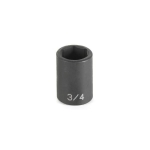
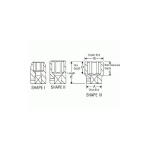
GP® 2029M Standard Length Socket, 1/2 in, 29 mm Hex Socket, 6 Points

Sealmaster® gold ER bearings feature a cylindrical OD and snap ring for easy installation in a roll assembly. Shaft lock is achieved by either setscrew or Skwezloc® concentric locking collar. The felt seal with flinger provide a good balance between contaminant entry, GoldPlex® HP grease loss and friction.


Browning 1-1/4"-ID 4-BOLT TRB FLANGE UNITS BRW FBE-920 X 1-1/4
Browning® E920 series mounted tapered roller bearings feature durable 1-piece non-expansion housings with Type E mounting dimensions and limited misalignment. The E920 series contains setscrew locking collars for easy installation. It also contains a contact face riding seal in order to provide a good balance between contaminant entry, grease retention and friction. Depending on your application requirements, these bearings are available in a wide variety of bore sizes and housing configurations.
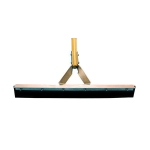
Squeegee frame is made of 1 in angle aluminum to which a 2 in W x 1/4 in thick strip of high grade flexible black squeegee rubber or neoprene is attached with cadmium plated screws. These squeegees are available with two different types of handle assembly. The numbers followed by TP or TPN are equipped with a tapered handle socket. Steel bracketed handle is included in the price and weight of the 41 Line, 41N Line, 46 Line and 46N Line squeegees.
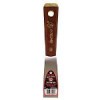
4" STIFF PUTTY KNIFE STAINLESS STEEL SCRAPER-JWH775967 >

JASON C136 C-SECTION, NATURAL RUBBER/SBR/POLYESTER, 140" OUTSIDE LENGTH, 7/8" TOP WIDTH, 17/32" THICK
V-BELT C SERIES. 140" BELT OUTSIDE LENGTH;7/8" BELT WIDTH; 1 BAND; POLYESTER TENSILE MATERIAL, RUBBER OUTER MATERIAL
-JASC136 >

