

Timing Pulleys

Browning® Gearbelt® 1054899 Type 2 Synchronous Timing Pulley With Flange, 1/4 to 1/2 in Bore, 1.126 in OD, 18 Grooves, 1.146 in Dia Pitch, 9/16 in W Face
Synchronous belt drives help reduce the problems of slippage, belt stretch, lubrication and metal to metal contact. They provide superior performance because power is transmitted by positive engagement of belt teeth rather than by friction, as in conventional belt drives.

Browning® Gearbelt® 1054873 Type 2 Synchronous Timing Pulley With Flange, 1/4 to 5/16 in Bore, 0.935 in OD, 15 Grooves, 0.955 in Dia Pitch, 9/16 in W Face
Synchronous belt drives help reduce the problems of slippage, belt stretch, lubrication and metal to metal contact. They provide superior performance because power is transmitted by positive engagement of belt teeth rather than by friction, as in conventional belt drives.

Browning® Gearbelt® 1054865 Type 2 Synchronous Timing Pulley With Flange, 1/4 to 1/4 in Bore, 0.871 in OD, 14 Grooves, 0.891 in Dia Pitch, 9/16 in W Face
Synchronous belt drives help reduce the problems of slippage, belt stretch, lubrication and metal to metal contact. They provide superior performance because power is transmitted by positive engagement of belt teeth rather than by friction, as in conventional belt drives.

Browning® Gearbelt® 1054782 Type 1 Synchronous Timing Pulley With Flange, 5/8 in Finished Bore, 1.88 in OD, 16 Grooves, 1.91 in Dia Pitch, 1-1/4 in W Face
Synchronous belt drives help reduce the problems of slippage, belt stretch, lubrication and metal to metal contact. They provide superior performance because power is transmitted by positive engagement of belt teeth rather than by friction, as in conventional belt drives.

Browning® Gearbelt® 1054667 Type 1 Synchronous Timing Pulley With Flange, 3/4 in Finished Bore, 1.88 in OD, 16 Grooves, 1.91 in Dia Pitch, 1 in W Face
Synchronous belt drives help reduce the problems of slippage, belt stretch, lubrication and metal to metal contact. They provide superior performance because power is transmitted by positive engagement of belt teeth rather than by friction, as in conventional belt drives.

Browning® Gearbelt® 1054659 Type 1 Synchronous Timing Pulley With Flange, 5/8 in Finished Bore, 1.88 in OD, 16 Grooves, 1.91 in Dia Pitch, 1 in W Face
Synchronous belt drives help reduce the problems of slippage, belt stretch, lubrication and metal to metal contact. They provide superior performance because power is transmitted by positive engagement of belt teeth rather than by friction, as in conventional belt drives.

Browning® Gearbelt® 1054634 Type 1 Synchronous Timing Pulley With Flange, 3/4 in Finished Bore, 1.76 in OD, 15 Grooves, 1.79 in Dia Pitch, 1 in W Face
Synchronous belt drives help reduce the problems of slippage, belt stretch, lubrication and metal to metal contact. They provide superior performance because power is transmitted by positive engagement of belt teeth rather than by friction, as in conventional belt drives.

Browning® Gearbelt® 1054600 Type 1 Synchronous Timing Pulley With Flange, 1/2 in Finished Bore, 1.641 in OD, 14 Grooves, 1.671 in Dia Pitch, 1 in W Face
Synchronous belt drives help reduce the problems of slippage, belt stretch, lubrication and metal to metal contact. They provide superior performance because power is transmitted by positive engagement of belt teeth rather than by friction, as in conventional belt drives.

Browning® Gearbelt® 1054568 Type 1 Synchronous Timing Pulley With Flange, 1/2 in Finished Bore, 1.402 in OD, 12 Grooves, 1.432 in Dia Pitch, 1 in W Face
Synchronous belt drives help reduce the problems of slippage, belt stretch, lubrication and metal to metal contact. They provide superior performance because power is transmitted by positive engagement of belt teeth rather than by friction, as in conventional belt drives.

Browning® Gearbelt® 1054550 Type 1 Synchronous Timing Pulley With Flange, 3/8 in Finished Bore, 1.402 in OD, 12 Grooves, 1.432 in Dia Pitch, 1 in W Face
Synchronous belt drives help reduce the problems of slippage, belt stretch, lubrication and metal to metal contact. They provide superior performance because power is transmitted by positive engagement of belt teeth rather than by friction, as in conventional belt drives.

Browning® Gearbelt® 1054501 Type 1 Synchronous Timing Pulley With Flange, 5/8 in Finished Bore, 1.88 in OD, 16 Grooves, 1.91 in Dia Pitch, 3/4 in W Face
Synchronous belt drives help reduce the problems of slippage, belt stretch, lubrication and metal to metal contact. They provide superior performance because power is transmitted by positive engagement of belt teeth rather than by friction, as in conventional belt drives.

Browning® Gearbelt® 1054493 Type 1 Synchronous Timing Pulley With Flange, 1/2 in Finished Bore, 1.88 in OD, 16 Grooves, 1.91 in Dia Pitch, 3/4 in W Face
Synchronous belt drives help reduce the problems of slippage, belt stretch, lubrication and metal to metal contact. They provide superior performance because power is transmitted by positive engagement of belt teeth rather than by friction, as in conventional belt drives.

Browning® Gearbelt® 1054451 Type 1 Synchronous Timing Pulley With Flange, 1/2 in Finished Bore, 1.641 in OD, 14 Grooves, 1.671 in Dia Pitch, 3/4 in W Face
Synchronous belt drives help reduce the problems of slippage, belt stretch, lubrication and metal to metal contact. They provide superior performance because power is transmitted by positive engagement of belt teeth rather than by friction, as in conventional belt drives.

Browning® Gearbelt® 1054444 Type 1 Synchronous Timing Pulley With Flange, 3/8 in Finished Bore, 1.641 in OD, 14 Grooves, 1.671 in Dia Pitch, 3/4 in W Face
Synchronous belt drives help reduce the problems of slippage, belt stretch, lubrication and metal to metal contact. They provide superior performance because power is transmitted by positive engagement of belt teeth rather than by friction, as in conventional belt drives.

Browning® Gearbelt® 1054428 Type 1 Synchronous Timing Pulley With Flange, 3/8 in Finished Bore, 1.522 in OD, 13 Grooves, 1.552 in Dia Pitch, 3/4 in W Face
Synchronous belt drives help reduce the problems of slippage, belt stretch, lubrication and metal to metal contact. They provide superior performance because power is transmitted by positive engagement of belt teeth rather than by friction, as in conventional belt drives.

Browning® 1055011 Type 2A Synchronous Timing Pulley, 5/16 to 1 in, 3.036 in OD, 48 Grooves, 3.056 in Dia Pitch, 0.563 in W Face
Browning® 1055011 Type 2A Synchronous Timing Pulley, 5/16 to 1 in, 3.036 in OD, 48 Grooves, 3.056 in Dia Pitch, 0.563 in W Face
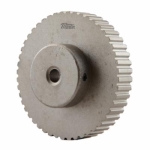

Martin timing pulleys are manufactured to extremely close specifications and are stocked in minimum plain bore, taper bushed, QD bushed styles depending on size and pitch. Synchronous sprockets are non-slip toothed drives that require no lubrication. These sprockets have a wide speed range, are very efficient and make less noise than chain drives. Teeth on the belts are molded to conform with and engage the teeth on a mating sprocket.

Synchronous belt drives help reduce the problems of slippage, belt stretch, lubrication and metal to metal contact. They provide superior performance because power is transmitted by positive engagement of belt teeth rather than by friction, as in conventional belt drives.

Synchronous belt drives help reduce the problems of slippage, belt stretch, lubrication and metal to metal contact. They provide superior performance because power is transmitted by positive engagement of belt teeth rather than by friction, as in conventional belt drives.

Synchronous belt drives help reduce the problems of slippage, belt stretch, lubrication and metal to metal contact. They provide superior performance because power is transmitted by positive engagement of belt teeth rather than by friction, as in conventional belt drives.

Synchronous belt drives help reduce the problems of slippage, belt stretch, lubrication and metal to metal contact. They provide superior performance because power is transmitted by positive engagement of belt teeth rather than by friction, as in conventional belt drives.

Synchronous belt drives help reduce the problems of slippage, belt stretch, lubrication and metal to metal contact. They provide superior performance because power is transmitted by positive engagement of belt teeth rather than by friction, as in conventional belt drives.

Synchronous belt drives help reduce the problems of slippage, belt stretch, lubrication and metal to metal contact. They provide superior performance because power is transmitted by positive engagement of belt teeth rather than by friction, as in conventional belt drives.

Synchronous belt drives help reduce the problems of slippage, belt stretch, lubrication and metal to metal contact. They provide superior performance because power is transmitted by positive engagement of belt teeth rather than by friction, as in conventional belt drives.
Recently Viewed

MORSE® 43659 1898 Center Cutting Regular Length Single End End Mill, 9/16 in Dia Cutter, 1-1/8 in Length of Cut, 2 Flutes, 1/2 in Dia Shank, 3-1/8 in OAL, Bright


Browning® mounted ball bearings feature multiple housing styles, materials and configurations, an extended inner race insert bearing with ball riding nylon retainer. The insert features a rivet to prevent outer ring rotation and is available with setscrew, eccentric or BOA concentric locking collar. The contact seal with black oxide treated flinger provides a good balance between contaminant resistance, grease loss and friction.


Sealmaster® 700124 Flange Mounted Ball Bearing, 3.438 in Dia Bore, 6-3/4 in L Bolt Center-to-Center, 4-Bolt Flange Mount
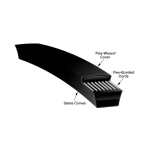

Gates® Power Transmission Hi-Power® II A89 Banded Classical Heavy Duty V-Belt, A Section, 1/2 in W Top, 91 in L Outside, 5/16 in THK, EPDM
The wrapped classical section Hi-Power™ V-belt has a long reputation for reliability on agricultural and industrial applications. The arched top of the Hi-Power belt provides superior strength to prevent "dishing" and distortion of the tensile section. The cords are properly aligned, each of them carrying its full share of the load.
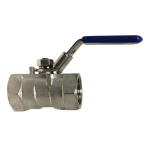
HCI Preferred Supplier 949103 1-Piece Ball Valve, 1/2 in Nominal, FNPT End Style, ASTM-A351 CF8M 316 Stainless Steel Body, Standard Port, PTFE Thrust Washer Stem Packing Softgoods

