

Freudenberg Sealing Technologies

Dichtomatik 75102017 O-Ring, 022 Dash Number, 0.989 in ID x 1.129 in OD, FKM, 75 Shore A Durometer, Import
O-rings are closed circular rings of circular cross-section. They are made through vulcanization from form tools as a complete ring. The sealing function of the O-ring is achieved by the deformation of the cross-section when installed and compressed in its housing. The O-ring can be compressed either radially or axially in its installation housing. In operating conditions the pressure exerted by the media reinforces the sealing function, as under pressure the elastomer material functions as a non-compressible fluid.
Dichtomatik 75102015 O-Ring, 020 Dash Number, 0.864 in ID x 1.004 in OD, FKM, 75 Shore A Durometer, Import
O-rings are closed circular rings of circular cross-section. They are made through vulcanization from form tools as a complete ring. The sealing function of the O-ring is achieved by the deformation of the cross-section when installed and compressed in its housing. The O-ring can be compressed either radially or axially in its installation housing. In operating conditions the pressure exerted by the media reinforces the sealing function, as under pressure the elastomer material functions as a non-compressible fluid.
Dichtomatik 75102009 O-Ring, 014 Dash Number, 0.489 in ID x 0.629 in OD, FKM, 75 Shore A Durometer, Import
O-rings are closed circular rings of circular cross-section. They are made through vulcanization from form tools as a complete ring. The sealing function of the O-ring is achieved by the deformation of the cross-section when installed and compressed in its housing. The O-ring can be compressed either radially or axially in its installation housing. In operating conditions the pressure exerted by the media reinforces the sealing function, as under pressure the elastomer material functions as a non-compressible fluid.
Dichtomatik 75102008 O-Ring, 013 Dash Number, 0.426 in ID x 0.566 in OD, FKM, 75 Shore A Durometer, Import
O-rings are closed circular rings of circular cross-section. They are made through vulcanization from form tools as a complete ring. The sealing function of the O-ring is achieved by the deformation of the cross-section when installed and compressed in its housing. The O-ring can be compressed either radially or axially in its installation housing. In operating conditions the pressure exerted by the media reinforces the sealing function, as under pressure the elastomer material functions as a non-compressible fluid.
Dichtomatik 75102007 O-Ring, 012 Dash Number, 0.364 in ID x 0.504 in OD, FKM, 75 Shore A Durometer, Import
O-rings are closed circular rings of circular cross-section. They are made through vulcanization from form tools as a complete ring. The sealing function of the O-ring is achieved by the deformation of the cross-section when installed and compressed in its housing. The O-ring can be compressed either radially or axially in its installation housing. In operating conditions the pressure exerted by the media reinforces the sealing function, as under pressure the elastomer material functions as a non-compressible fluid.
Dichtomatik 75102006 O-Ring, 011 Dash Number, 0.301 in ID x 0.441 in OD, FKM, 75 Shore A Durometer, Import
O-rings are closed circular rings of circular cross-section. They are made through vulcanization from form tools as a complete ring. The sealing function of the O-ring is achieved by the deformation of the cross-section when installed and compressed in its housing. The O-ring can be compressed either radially or axially in its installation housing. In operating conditions the pressure exerted by the media reinforces the sealing function, as under pressure the elastomer material functions as a non-compressible fluid.
Dichtomatik 75102005 O-Ring, 010 Dash Number, 0.239 in ID x 0.379 in OD, FKM, 75 Shore A Durometer, Import
O-rings are closed circular rings of circular cross-section. They are made through vulcanization from form tools as a complete ring. The sealing function of the O-ring is achieved by the deformation of the cross-section when installed and compressed in its housing. The O-ring can be compressed either radially or axially in its installation housing. In operating conditions the pressure exerted by the media reinforces the sealing function, as under pressure the elastomer material functions as a non-compressible fluid.
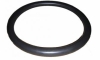
Dichtomatik 75102004 O-Ring, 009 Dash Number, 0.208 in ID x 0.348 in OD, FKM, 75 Shore A Durometer, Import
O-rings are closed circular rings of circular cross-section. They are made through vulcanization from form tools as a complete ring. The sealing function of the O-ring is achieved by the deformation of the cross-section when installed and compressed in its housing. The O-ring can be compressed either radially or axially in its installation housing. In operating conditions the pressure exerted by the media reinforces the sealing function, as under pressure the elastomer material functions as a non-compressible fluid.
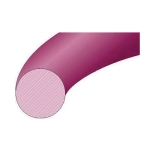
Dichtomatik 75065586 Extruded O-Ring Cord, 3/8 in Dia, 50 Durometer, Nitrile, Domestic
O-rings are endless, ring shaped sealing elements with a circular cross-section that are manufactured from elastomer materials or PTFE. The designation of an O-ring is derived from the dimensions of its inner diameter and cord width in millimeters, along with the name of the material and its Shore A hardness.
Dichtomatik 75065323 Extruded O-Ring Cord, 1/8 in Dia, 70 Shore A Durometer, Nitrile, Black, Domestic
O-rings are endless, ring shaped sealing elements with a circular cross-section that are manufactured from elastomer materials or PTFE. The designation of an O-ring is derived from the dimensions of its inner diameter and cord width in millimeters, along with the name of the material and its Shore A hardness.

Dichtomatik N70SPLKIT Splicing Kit, 70 D Nitrile Rubber
O-rings are endless, ring shaped sealing elements with a circular cross-section that are manufactured from elastomer materials or PTFE. The designation of an O-ring is derived from the dimensions of its inner diameter and cord width in millimeters, along with the name of the material and its Shore A hardness.
O-rings are endless, ring shaped sealing elements with a circular cross-section that are manufactured from elastomer materials or PTFE. The designation of an O-ring is derived from the dimensions of its inner diameter and cord width in millimeters, along with the name of the material and its Shore A hardness.
O-rings are endless, ring shaped sealing elements with a circular cross-section that are manufactured from elastomer materials or PTFE. The designation of an O-ring is derived from the dimensions of its inner diameter and cord width in millimeters, along with the name of the material and its Shore A hardness.

Dichtomatik 67192429 O-Ring, 35 mm ID x 41 mm OD, Nitrile Rubber, 70 Shore A Durometer, Import
O-rings are closed circular rings of circular cross-section. They are made through vulcanization from form tools as a complete ring. The sealing function of the O-ring is achieved by the deformation of the cross-section when installed and compressed in its housing. The O-ring can be compressed either radially or axially in its installation housing. In operating conditions the pressure exerted by the media reinforces the sealing function, as under pressure the elastomer material functions as a non-compressible fluid.
Dichtomatik 67192236 O-Ring, 6 mm ID x 10 mm OD, Nitrile Rubber, 70 Shore A Durometer, Import, Custom H-2 X 6
O-rings are closed circular rings of circular cross-section. They are made through vulcanization from form tools as a complete ring. The sealing function of the O-ring is achieved by the deformation of the cross-section when installed and compressed in its housing. The O-ring can be compressed either radially or axially in its installation housing. In operating conditions the pressure exerted by the media reinforces the sealing function, as under pressure the elastomer material functions as a non-compressible fluid.
Dichtomatik 67191875 O-Ring, 54 mm ID x 60 mm OD, Nitrile Rubber, 70 Shore A Durometer, Import
O-rings are closed circular rings of circular cross-section. They are made through vulcanization from form tools as a complete ring. The sealing function of the O-ring is achieved by the deformation of the cross-section when installed and compressed in its housing. The O-ring can be compressed either radially or axially in its installation housing. In operating conditions the pressure exerted by the media reinforces the sealing function, as under pressure the elastomer material functions as a non-compressible fluid.
Dichtomatik 67188388 O-Ring, 3 mm ID x 7 mm OD, Nitrile Rubber, 70 Shore A Durometer, Import, Custom H-2 X 3
O-rings are closed circular rings of circular cross-section. They are made through vulcanization from form tools as a complete ring. The sealing function of the O-ring is achieved by the deformation of the cross-section when installed and compressed in its housing. The O-ring can be compressed either radially or axially in its installation housing. In operating conditions the pressure exerted by the media reinforces the sealing function, as under pressure the elastomer material functions as a non-compressible fluid.
Dichtomatik 67025160 O-Ring, 29.4 mm ID x 35.6 mm OD, FKM, 80 Shore A Durometer, Import, Custom G-30-Vv
O-rings are endless, ring shaped sealing elements with a circular cross-section that are manufactured from elastomer materials or PTFE. The designation of an O-ring is derived from the dimensions of its inner diameter and cord width in millimeters, along with the name of the material and its Shore A hardness.
Dichtomatik 67024982 O-Ring, 7.8 mm ID x 11.6 mm OD, FKM, 80 Shore A Durometer, Import
O-rings are endless, ring shaped sealing elements with a circular cross-section that are manufactured from elastomer materials or PTFE. The designation of an O-ring is derived from the dimensions of its inner diameter and cord width in millimeters, along with the name of the material and its Shore A hardness.
Dichtomatik 67023545 O-Ring, 29.4 mm ID x 35.6 mm OD, Nitrile Rubber, 70 Shore A Durometer, Import, Custom G-30
O-rings are closed circular rings of circular cross-section. They are made through vulcanization from form tools as a complete ring. The sealing function of the O-ring is achieved by the deformation of the cross-section when installed and compressed in its housing. The O-ring can be compressed either radially or axially in its installation housing. In operating conditions the pressure exerted by the media reinforces the sealing function, as under pressure the elastomer material functions as a non-compressible fluid.
Dichtomatik 67013594 O-Ring, 180 mm ID x 190 mm OD, FKM, 80 Shore A Durometer, Import
O-rings are endless, ring shaped sealing elements with a circular cross-section that are manufactured from elastomer materials or PTFE. The designation of an O-ring is derived from the dimensions of its inner diameter and cord width in millimeters, along with the name of the material and its Shore A hardness.
O-rings are endless, ring shaped sealing elements with a circular cross-section that are manufactured from elastomer materials or PTFE. The designation of an O-ring is derived from the dimensions of its inner diameter and cord width in millimeters, along with the name of the material and its Shore A hardness.
Dichtomatik 67013355 O-Ring, 42 mm ID x 46 mm OD, FKM, 80 Shore A Durometer, Import, Custom H-2 x 42-VITON
O-rings are endless, ring shaped sealing elements with a circular cross-section that are manufactured from elastomer materials or PTFE. The designation of an O-ring is derived from the dimensions of its inner diameter and cord width in millimeters, along with the name of the material and its Shore A hardness.
Recently Viewed

250-PIECE WIRE TERMINAL KIT-RGLTK360 >

5" X .040" METAL CUT-OFF DISC-DBLDBD050040101F
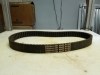
VARIABLE SPEED BELTS-BRW2322V441>
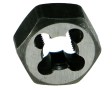
Hexagon Threading Dies are multi-edged, internally threaded tools used for cutting external threads. Hexagon dies are the same size as standard Hex Nuts.

NOTCHED GRIP V-BELTS-PIX5VX600>

Littelfuse® POWR-GARD® NLN400 Fast Blow One Time Fuse, 400 A, 250 V AC/DC, 50 kA Interrupt, Class: K5, Cartridge Body
NLN series fuses provide low cost protection for general purpose feeder and branch circuits when available short circuit currents are less than 50000 A. They replace all Class H fuses which have only a 10000 A interrupting rating. They are suitable for use in many residential and smaller commercial and industrial applications. NLKP series fuses are Canadian "Code" fuses specifically designed to meet Canadian electrical code type P fuse requirements for residential use. They have a 10000 A interrupting rating. However, to obtain the added benefits of time delay, current limitation and higher interrupting rating, consider the use of POWR-PRO® IDSR Indicator fuses for circuits between 250 and 600 V. The user gets all the benefits of time delay RK5 fuses plus the added benefits of a n indicating fuse that tells when it has opened. complete information on these fuses may be found in the POWR-PRO® section of this catalog. for circuits upto 250 V, see FLNR fuses in this section of the catalog.

