

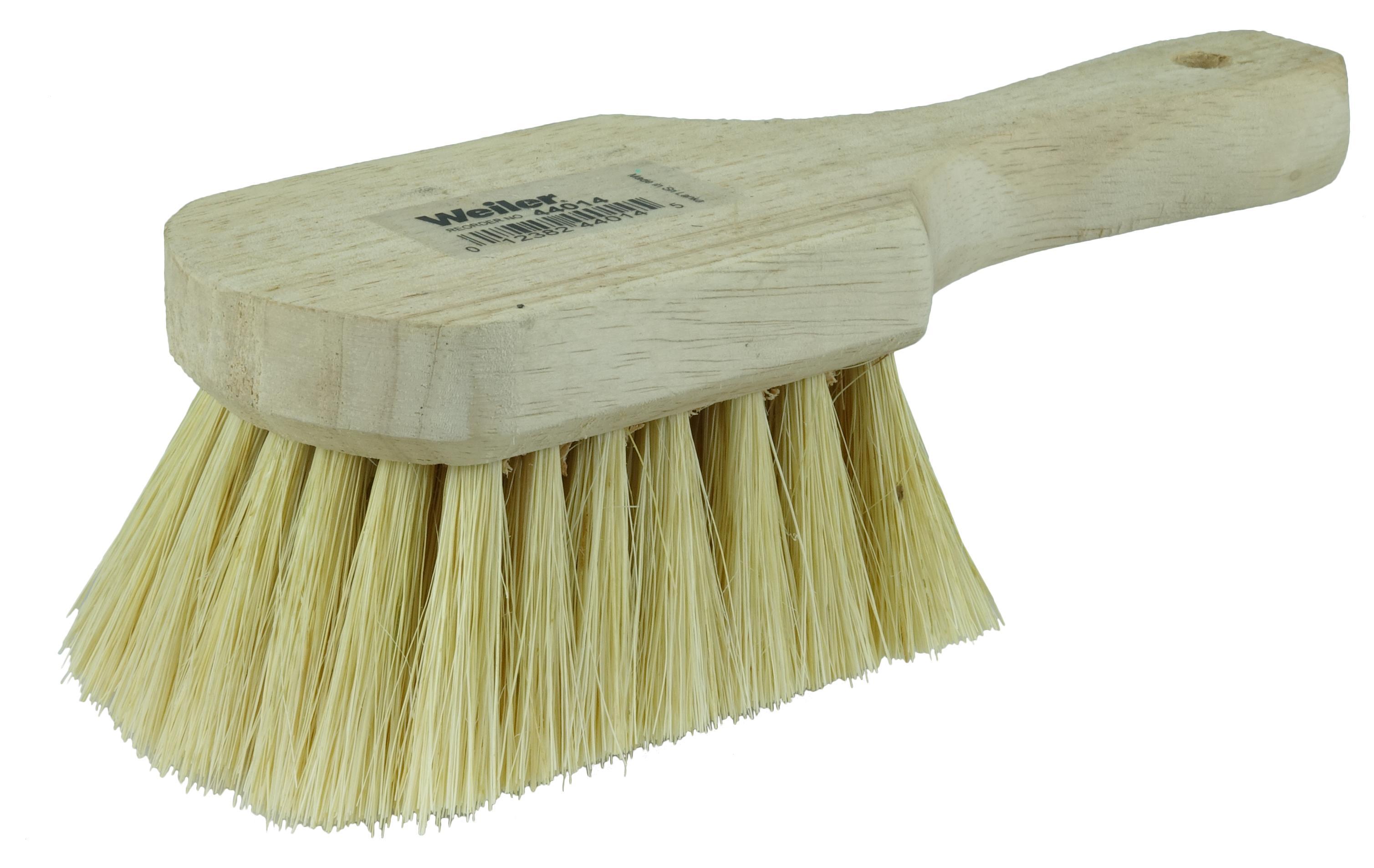
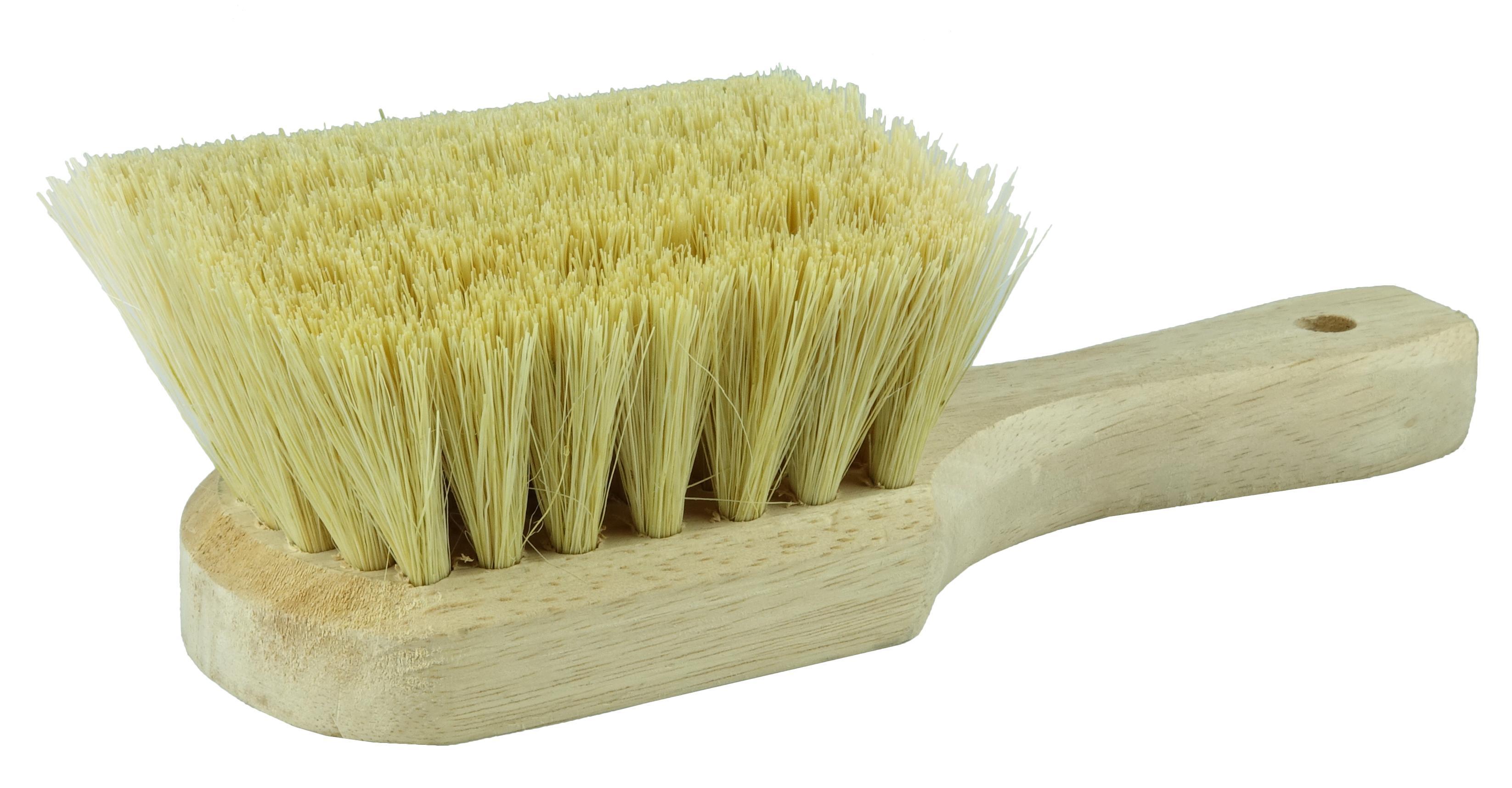
Weiler® 44014 Utility Scrub Brush, 8 in L x 3 in W Block, 8 in OAL, 2 in L Tampico Trim

Weiler® 44014 Utility Scrub Brush, 8 in L x 3 in W Block, 8 in OAL, 2 in L Tampico Trim
-
BrandWeiler®
-
UPC012382440145
-
Manufacturer Part Number44014
-
CountryUSA|Canada
-
FinishSanded
-
Trim Length2 in
-
Trim MaterialTampico
-
Handle MaterialWood
-
Handle TypeShort
-
Block Size8 in L x 3 in W
-
Block TypeWood
-
Overall Length8 in
| Competitor Name | Cross-Reference Number |
|---|---|
| MSC | 82071192 |
-
UNSPSC47131605
-
Package Description12/PK
-
Standards/ApprovalsANSI B165.1|CSA Approved
Recently Viewed
Weiler® 44014 Utility Scrub Brush, 8 in L x 3 in W Block, 8 in OAL, 2 in L Tampico Trim
Weiler® 44014 Utility Scrub Brush, 8 in L x 3 in W Block, 8 in OAL, 2 in L Tampico Trim

CGW® 39931 Contaminant-Free Coated Flap Wheel, 2 in Dia Wheel, 1 in W Face, 1/4 in Dia Shank, 40 Grit, Medium Grade, Aluminum Oxide Abrasive
CGW® 39931 Contaminant-Free Coated Flap Wheel, 2 in Dia Wheel, 1 in W Face, 1/4 in Dia Shank, 40 Grit, Medium Grade, Aluminum Oxide Abrasive
Dichtomatik 75115271 O-Ring, 260 Dash Number, 6.484 in ID x 6.762 in OD, PTFE, 55 Durometer, Import
O-rings are endless, ring shaped sealing elements with a circular cross-section that are manufactured from elastomer materials or PTFE. The designation of an O-ring is derived from the dimensions of its inner diameter and cord width in millimeters, along with the name of the material and its Shore A hardness.

EC-206 Dodge® 128282 206 Bearing End Cover, 2-1/2 in OD, 1-21/64 in W, Polymer Housing
EC-206 Dodge® 128282 206 Bearing End Cover, 2-1/2 in OD, 1-21/64 in W, Polymer Housing

8-RIB POLY-V V-BELT-JAS520J8 >

Browning® Gearbelt® 1056621 Type 16 Synchronous Timing Pulley With Flange, 3/8 to 1-1/2 in Split Taper Bore, 4.267 in OD, 36 Grooves, 4.297 in Dia Pitch, 1-1/4 in W Face
Synchronous belt drives help reduce the problems of slippage, belt stretch, lubrication and metal to metal contact. They provide superior performance because power is transmitted by positive engagement of belt teeth rather than by friction, as in conventional belt drives.

