

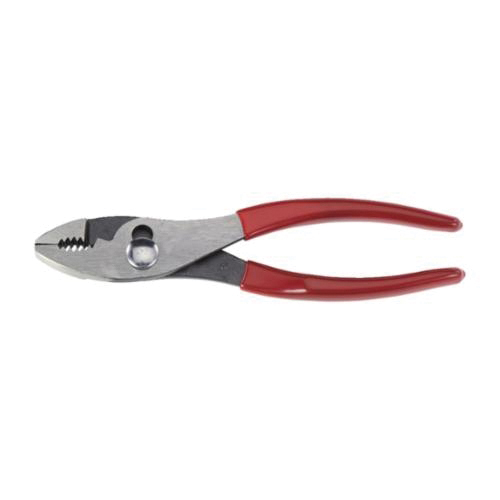
Proto Tools 9-9/16" SLIP JOINT PLIER W/GRIPS PRO J-280-G
$31.25
Out of Stock
SKU: PROJ280G
GTIN (EAN,ISBN): 00662679031381

Proto® J280G Combination Slip Joint Plier, 2-3/8 in L x 1-7/16 in W x 15/32 in THK Forged Alloy Steel Jaw, Serrated Jaw Surface, 9-9/16 in OAL, No, ASME B107.23
In Stock
HCI of Jackson: 0
HCI of Dyersburg: 0
HCI of Humboldt: 0
HCI of Union City: 0
HCI of Gallatin: 0
Back to: Slip Joint Pliers
Main specs
-
BrandProto®
-
UPC662679031381
-
Manufacturer Part NumberJ280G
-
CountryUSA|Canada
Specification
-
FinishSatin
-
ColorRed
-
TypeCombination
-
Handle MaterialPlastic
-
Handle TypeDipped Grip
-
Nominal Capacity1-7/13 in
-
Non-SparkingNo
-
Wire StripperNo
-
Insulated GripNo
-
Specifications MetASME B107.23
-
Jaw MaterialForged Alloy Steel
-
Jaw Size2-3/8 in L x 1-7/16 in W x 15/32 in THK
-
Jaw SurfaceSerrated
-
Overall Length9-9/16 in
Features
- Has two jaw positions and shear type wire cutter
- Plastisol grips for added comfort
Competitor Information
| Competitor Name | Cross-Reference Number |
|---|---|
| Grainger | 3R267 |
Additional Information
-
UNSPSC27112145
-
Package DescriptionEACH
-
Standards/ApprovalsASME B107.23
Attachments
-
Catalog
Reviews
Recently Viewed
Proto® J280G Combination Slip Joint Plier, 2-3/8 in L x 1-7/16 in W x 15/32 in THK Forged Alloy Steel Jaw, Serrated Jaw Surface, 9-9/16 in OAL, No, ASME B107.23
HARNESS WITH LANYARD 853ABH491A400XX L-FRE853ABH491A400XX >

