

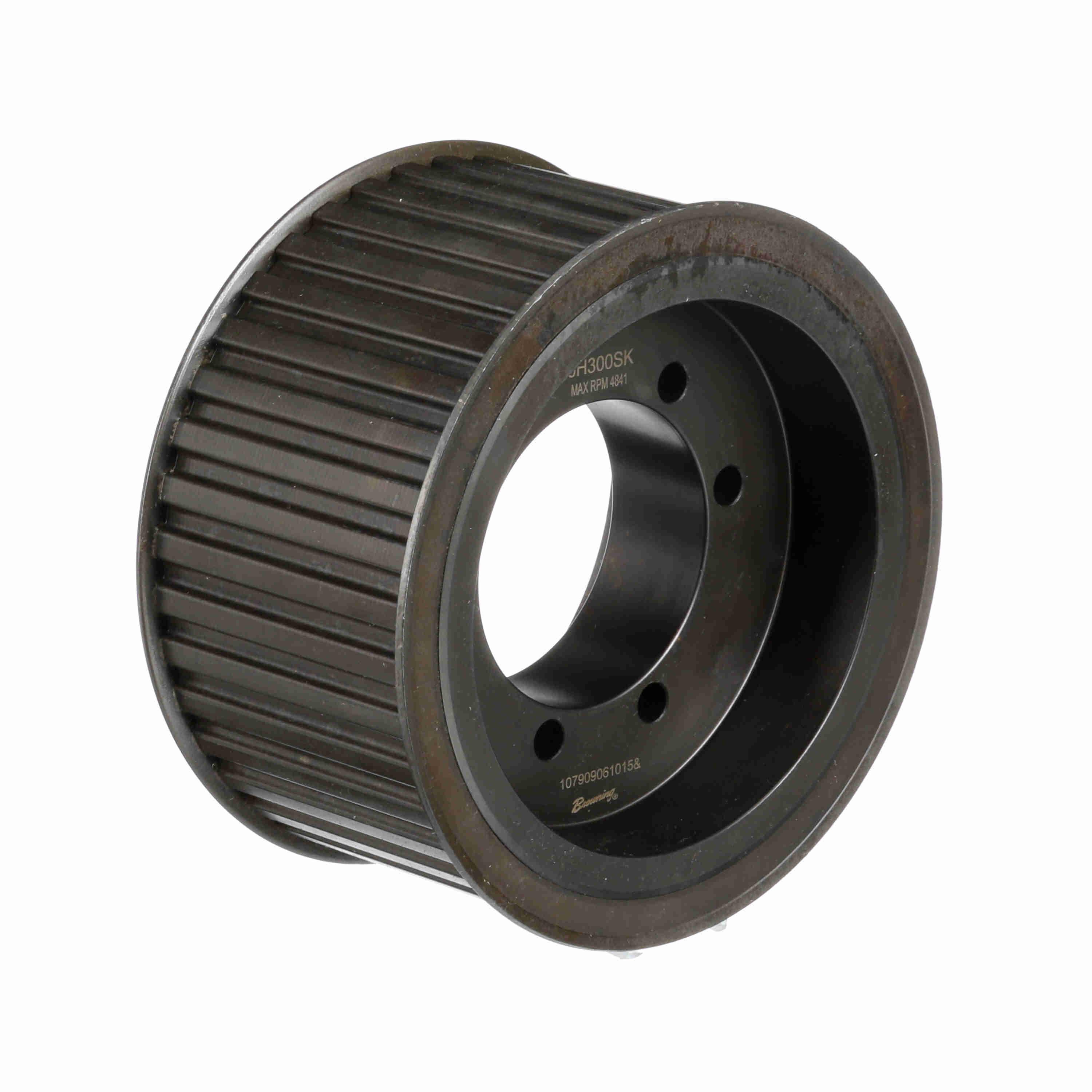
Browning 40-TOOTH H-PITCH QD T/BELT SHEAVES BRW 40-H-150-SK

Synchronous belt drives help reduce the problems of slippage, belt stretch, lubrication and metal to metal contact. They provide superior performance because power is transmitted by positive engagement of belt teeth rather than by friction, as in conventional belt drives.
-
BrandBrowning®
-
UPC662289351336
-
Manufacturer Part Number3513991
-
CountryUSA
-
Face Width1-13/16 in
-
Bushing TypeSK
-
Pitch1/2 in
-
Pitch Diameter6.366 in
-
Flange Diameter6-9/16 in
-
TypeSolid Type BF
-
Number of Grooves40
-
Outside Diameter6.312 in
-
Bore Diameter1/2 to 2-5/8 in
-
Bore TypeQD®
-
Overall Length2-5/32 in
-
Suitable For Use With1 in W Type H150 Belt
- Constant speed, no slip, no creep, minimum backlash, because of the positive grip of the belt teeth with pulley grooves
- High modulus strength member, needs minimum take-up
- Freedom from initial belt tension, reduces bearing loads, increases life
- Compact design Gearbelt® belts permit smaller pulleys, shorter centers and narrow belts
- Lightweight, high horsepower-to-weight ratio makes Gearbelt® drives ideal for any application where weight is an important factor
- Less heat, because Gearbelt® drives generate virtually no friction
- No lubrication required
- Wide load capacity range
- Wide belt speed range
-
Alternative Part Number40H150SK
-
UNSPSC26111807
-
Package Description1/PK
-
Warranty1 Year
-
Instruction/Installation Manual
-
Specification Sheet
-
Catalog
Recently Viewed

Synchronous belt drives help reduce the problems of slippage, belt stretch, lubrication and metal to metal contact. They provide superior performance because power is transmitted by positive engagement of belt teeth rather than by friction, as in conventional belt drives.

Synchronous belt drives help reduce the problems of slippage, belt stretch, lubrication and metal to metal contact. They provide superior performance because power is transmitted by positive engagement of belt teeth rather than by friction, as in conventional belt drives.


Browning® mounted ball bearings feature multiple housing styles, materials and configurations, an extended inner race insert bearing with ball riding nylon retainer. The insert features a rivet to prevent outer ring rotation and is available with setscrew, eccentric, or BOA concentric locking collar. The contact seal, with black oxide treated flinger provides a good balance between contaminant resistance, grease loss and friction. Depending on your preference, these bearings are available in inch and metric bore with a wide variety of cast iron, stamped steel or rubber mount housings or specific industry solutions as illustrated on the pages to follow.

Alemite® 1688-B Lubrication Fitting, 1/8-27 PTF Thread, 57/64 in OAL, 19/64 in L Shank, Steel, Trivalent Zinc Plated

40-LB WATER SOFTENER SALT CUBES-JWH460478 >

1-1/2" 90-DEGREE COPPER ELBOW-NIB60711/2 >

