

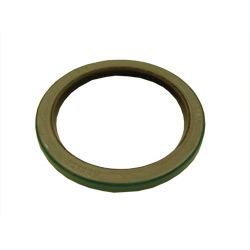
2450 .250" X .499" X .188

.250" X .499" X .188 OIL SEAL-CHI2450 >
Recently Viewed
.250" X .499" X .188 OIL SEAL-CHI2450 >

Remke Tuff-Seal™ RSR-107 Form Size 2 Straight Cord Grip Connector With Locknut, O-Ring, 1/2 in Trade, 3, 4 Conductors, 0.375 to 0.438 in Cable Openings, Aluminum, Nickel Plated
Remke Tuff-Seal™ RSR-107 Form Size 2 Straight Cord Grip Connector With Locknut, O-Ring, 1/2 in Trade, 3, 4 Conductors, 0.375 to 0.438 in Cable Openings, Aluminum, Nickel Plated


Gates 5-VX-1800 V-Belt - 5VX Section, 5/8 in Top Width, 1 Strand, 180.0000 in Nominal Outside Length, Cogg
Finding a belt that fits into your compact machinery without sacrificing power or efficiency is a daily challenge. When every inch of space is precious and traditional belts just don't cut it, the Super HC Molded Notch (MN) V-belt is your solution. This bandless, high-performance belt, crafted from ethylene elastomer with precision-molded notches, provides superior cord support and flexibility to improve load distribution and reduce maintenance needs. Whether you aim to boost your drive efficiency or minimize downtime, Gates Super HC MN V-belts deliver the durability and performance to keep your industrial processes running smoothly.

2.250" X 3.251" X .375" OIL SEAL-CHI22440 >
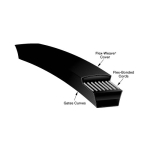

Gates® Power Transmission Hi-Power® II A54 Banded Classical Heavy Duty V-Belt, A Section, 1/2 in W Top, 56 in L Outside, 5/16 in THK, EPDM
The wrapped classical section Hi-Power™ V-belt has a long reputation for reliability on agricultural and industrial applications. The arched top of the Hi-Power belt provides superior strength to prevent "dishing" and distortion of the tensile section. The cords are properly aligned, each of them carrying its full share of the load.

Browning® Gearbelt® 1055052 Type 2 Synchronous Timing Pulley With Flange, 1/2 to 7/8 in Bore, 2.238 in OD, 19 Grooves, 2.268 in Dia Pitch, 3/4 in W Face
Synchronous belt drives help reduce the problems of slippage, belt stretch, lubrication and metal to metal contact. They provide superior performance because power is transmitted by positive engagement of belt teeth rather than by friction, as in conventional belt drives.

