

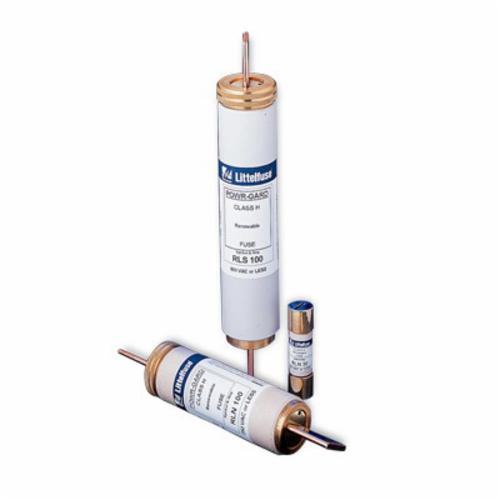
Littelfuse 70-AMP 250-V AC FUSELINKS LIT LKN-70

The LKN Series are fuse links designed for Littelfuse RLN series renewable fuses. Traditionally, Class H fuses were used to provide low cost protection of general purpose feeder and branch circuits where available short-circuit currents did not exceed 10,000 amperes. However, generally increased levels of available fault current and the distinct possibility that renewable fuses may be improperly renewed, rendering them unsafe, have all but eliminated the use of these fuses in new applications. In addition, escalating labour costs and increasing automation, which makes downtime very expensive, have greatly reduced or eliminated the cost savings attributed to renewable fuses.
-
BrandLittelfuse®
-
UPC079458320794
-
Manufacturer Part NumberLKN070
-
CountryUSA|Canada
-
Rated Breaking Capacity10 kA
-
Frequency Rating50/60 Hz
-
Mounting TypeBlade
-
Voltage Rating250 V AC
-
Amperage Rating70 A
-
SeriesLKN
-
Dimensions5-7/8 in L x 1 in W
-
Suitable For Use WithRLN Series Class H Single Element Renewable/Time Delay Fuse
- Electrically connected to the end blade
-
UNSPSC39121609
-
Standards/ApprovalsUL Listed|CSA/CE Certified|RoHS Compliant
Recently Viewed
The LKN Series are fuse links designed for Littelfuse RLN series renewable fuses. Traditionally, Class H fuses were used to provide low cost protection of general purpose feeder and branch circuits where available short-circuit currents did not exceed 10,000 amperes. However, generally increased levels of available fault current and the distinct possibility that renewable fuses may be improperly renewed, rendering them unsafe, have all but eliminated the use of these fuses in new applications. In addition, escalating labour costs and increasing automation, which makes downtime very expensive, have greatly reduced or eliminated the cost savings attributed to renewable fuses.
NYL/INSULATED FEMALE WIRE TERMINAL-MMM72F25032NL >
The LKN Series are fuse links designed for Littelfuse RLN series renewable fuses. Traditionally, Class H fuses were used to provide low cost protection of general purpose feeder and branch circuits where available short-circuit currents did not exceed 10,000 amperes. However, generally increased levels of available fault current and the distinct possibility that renewable fuses may be improperly renewed, rendering them unsafe, have all but eliminated the use of these fuses in new applications. In addition, escalating labour costs and increasing automation, which makes downtime very expensive, have greatly reduced or eliminated the cost savings attributed to renewable fuses.

DRILLCO 480N007 Type B Heavy Duty Jobber Length Drill Bit, #7 Drill - Wire, 0.081 in Drill - Decimal Inch, 135 deg Point, HSS, Oxide Treated
Nitro® drills (NAS Type B) offer superior performance over standard HSS drills. Heavy-duty design increases tool life and performance. 135° Split Point reduces walking at the point. Ideal for both hand held and CNC Operations. Black & Gold.
The LKN Series are fuse links designed for Littelfuse RLN series renewable fuses. Traditionally, Class H fuses were used to provide low cost protection of general purpose feeder and branch circuits where available short-circuit currents did not exceed 10,000 amperes. However, generally increased levels of available fault current and the distinct possibility that renewable fuses may be improperly renewed, rendering them unsafe, have all but eliminated the use of these fuses in new applications. In addition, escalating labour costs and increasing automation, which makes downtime very expensive, have greatly reduced or eliminated the cost savings attributed to renewable fuses.
The LKN Series are fuse links designed for Littelfuse RLN series renewable fuses. Traditionally, Class H fuses were used to provide low cost protection of general purpose feeder and branch circuits where available short-circuit currents did not exceed 10,000 amperes. However, generally increased levels of available fault current and the distinct possibility that renewable fuses may be improperly renewed, rendering them unsafe, have all but eliminated the use of these fuses in new applications. In addition, escalating labour costs and increasing automation, which makes downtime very expensive, have greatly reduced or eliminated the cost savings attributed to renewable fuses.

