

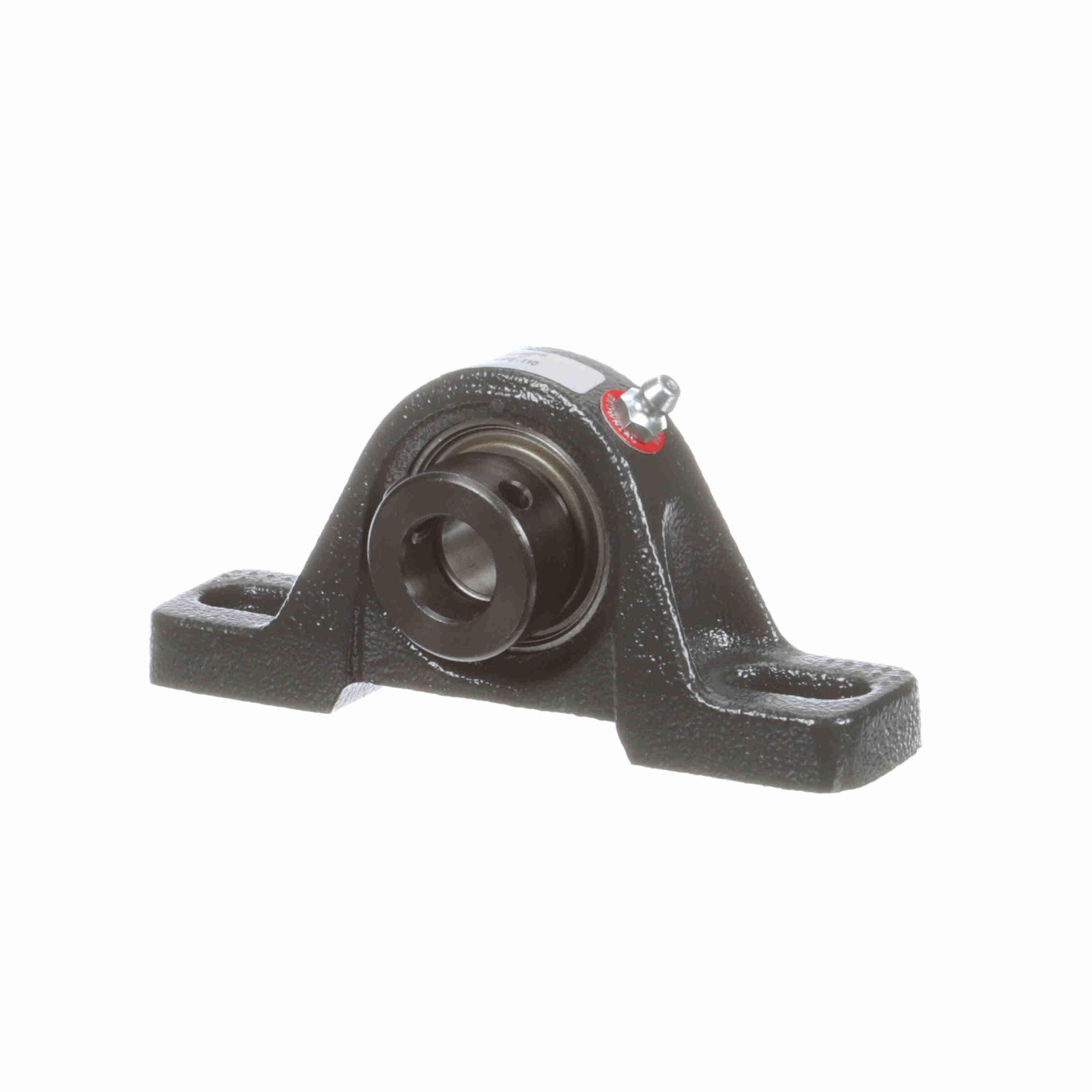
Browning 5/8"-ID 2-B HIGH BB PILLOW BLOCKS BRW VP-E-110

Browning® mounted ball bearings feature multiple housing styles, materials and configurations, an extended inner race insert bearing with ball riding nylon retainer. The insert features a rivet to prevent outer ring rotation and is available with setscrew, eccentric, or BOA concentric locking collar. The contact seal, with black oxide treated flinger provides a good balance between contaminant resistance, grease loss and friction. Depending on your preference, these bearings are available in inch and metric bore with a wide variety of cast iron, stamped steel or rubber mount housings or specific industry solutions as illustrated on the pages to follow.
-
BrandBrowning®
-
UPC662289551552
-
Manufacturer Part Number767295
-
CountryUSA
-
Load Capacity2108 lb Dynamic/1117 lb Static
-
Locking DeviceEccentric
-
Temperature Rating-20 to 200 deg F
-
FinishGray Painted
-
MaterialCast Iron
-
Maximum Speed5000 rpm
-
TypeIntermediate Duty
-
Mounting TypeTwo-Bolt Base
-
Seal TypeSingle Lip
-
SeriesVPE 100
-
Base Width1-7/32 in
-
Base to Bore Centerline1-3/16 in
-
Bolt Center-to-Center Length3-3/16 to 4-1/16 in
-
Bore Diameter5/8 in
-
Bore TypeRound
-
Expansion TypeNon-Expansion (Fixed)
-
Overall Height2-7/32 in
-
Overall Length4-7/8 in
- Eccentric locking design incorporates a precision eccentric collar to mate with the inner ring extension for shaft hold
- The rugged base design provides an excellent mounting foundation, this is integral to prevent sheet metal
- Positive contact molded nitrile rubber contact seal
- An anti-rotation rivet prevents outer ring creep or rotation, within the housing
- Zone hardened inner race
- Spherical outer diameter bearing insert
- 52100 steel insert
- Alemite fitting lubrication
- Nylon retainer
-
Alternative Part NumberVPE-110
-
UNSPSC31171515
-
Standards/ApprovalsANSI/ABMA STD 9
-
Specification Sheet
-
Instruction/Installation Manual
Recently Viewed

Browning® mounted ball bearings feature multiple housing styles, materials and configurations, an extended inner race insert bearing with ball riding nylon retainer. The insert features a rivet to prevent outer ring rotation and is available with setscrew, eccentric, or BOA concentric locking collar. The contact seal, with black oxide treated flinger provides a good balance between contaminant resistance, grease loss and friction. Depending on your preference, these bearings are available in inch and metric bore with a wide variety of cast iron, stamped steel or rubber mount housings or specific industry solutions as illustrated on the pages to follow.
72 WATT 4PK SOFT WHITE BULB-JWH500588>

Browning® Gearbelt® 1055482 Type 2 Synchronous Timing Pulley With Flange, 3/4 to 1-7/8 in Bore, 3.766 in OD, 24 Grooves, 3.82 in Dia Pitch, 1-1/4 in W Face
Synchronous belt drives help reduce the problems of slippage, belt stretch, lubrication and metal to metal contact. They provide superior performance because power is transmitted by positive engagement of belt teeth rather than by friction, as in conventional belt drives.
25-WATT WHITE G-25 GLOBE BULB-JWH557226 >

Browning® mounted ball bearings feature multiple housing styles, materials and configurations, an extended inner race insert bearing with ball riding nylon retainer. The insert features a rivet to prevent outer ring rotation and is available with setscrew, eccentric, or BOA concentric locking collar. The contact seal, with black oxide treated flinger provides a good balance between contaminant resistance, grease loss and friction. Depending on your preference, these bearings are available in inch and metric bore with a wide variety of cast iron, stamped steel or rubber mount housings or specific industry solutions as illustrated on the pages to follow.

Browning® Gearbelt® 1055250 Type 2 Synchronous Timing Pulley With Flange, 5/8 to 1-5/8 in Bore, 3.79 in OD, 32 Grooves, 3.82 in Dia Pitch, 1 in W Face
Synchronous belt drives help reduce the problems of slippage, belt stretch, lubrication and metal to metal contact. They provide superior performance because power is transmitted by positive engagement of belt teeth rather than by friction, as in conventional belt drives.

