


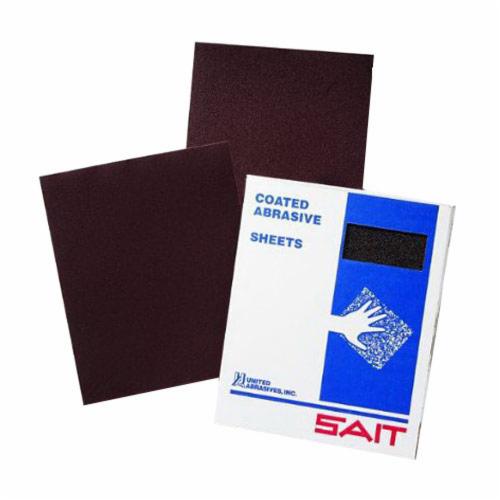


SAIT 9" X 11" 100-GRIT EMERY CLOTH SAI 84912

United Abrasives-SAIT 84912 DAF Sanding Sheet, 11 in L x 9 in W, 100 Grit, Aluminum Oxide Abrasive, Cloth Backing
-
BrandUnited Abrasives-SAIT
-
UPC699053849126
-
Manufacturer Part Number84912
-
CountryUSA|Canada
-
ColorBrown
-
Grit100
-
Abrasive MaterialAluminum Oxide
-
Applicable MaterialsWood, Plastic, Fiberglass, Ferrous and Non-Ferrous Metals
-
Width9 in
-
SeriesDAF
-
Backing MaterialCloth
-
Backing WeightF-Weight
-
Length11 in
- Open coat structure prevents loading
- Long life combined with excellent stock removal
- Resin over resin construction for a strong bond that is resistant to heat and moisture
- Box label UPC bar coded for easy identification and inventory maintenance
- Box label UPC bar coded for easy identification and inventory maintenance
- Our highest quality industrial paper for extra durability on all applications
- Broad assortment of grit sizes for a wide range of sanding and finishing applications
| Competitor Name | Cross-Reference Number |
|---|---|
| Fastenal | 0834504 |
-
UNSPSC31191500
-
Package Description50/BX
-
SDS
Recently Viewed
United Abrasives-SAIT 84912 DAF Sanding Sheet, 11 in L x 9 in W, 100 Grit, Aluminum Oxide Abrasive, Cloth Backing


Drillco 437E148 4375E Imperial Chucking Reamer, 3/4 in Dia x 9-1/2 in OAL, Straight Shank, Spiral Flute
Straight Shank Chucking Reamers are designed for general purpose reaming in machines such as drill presses, turret lathes, and screw machines. They have shorter and deeper flutes than hand reamers. For machine reaming.
4-MM X 5-MM-THREAD "COILOCK"-STYLE PUSH-TO-CONNECT SWIVEL ELBOW

EATON BR2125 Type BR Circuit Breaker, 120/240 V AC, 125 A, 10 kA Interrupt, 2 Poles, Thermal Magnetic Trip
Eaton’s BR circuit breakers are used in indoor and outdoor BR loadcenters, spa panels, meter breakers and sub panels. They are designed for a wide range of applications such as high short-circuit interrupt, series rating combinations with upstream main breakers, thermal magnetic, AFCI, GFCI, equipment protection and dual function AF/GF.
#22 - #18 10-STUD SPADE WIRE TERMINAL-DEL861105 >

